Showing posts with label grapefruit. Show all posts

Monday, January 30, 2023

Sugar Free Pink Grapefruit Marmalade (Low Carb, Keto)

Sugar Free Pink Grapefruit Marmalade
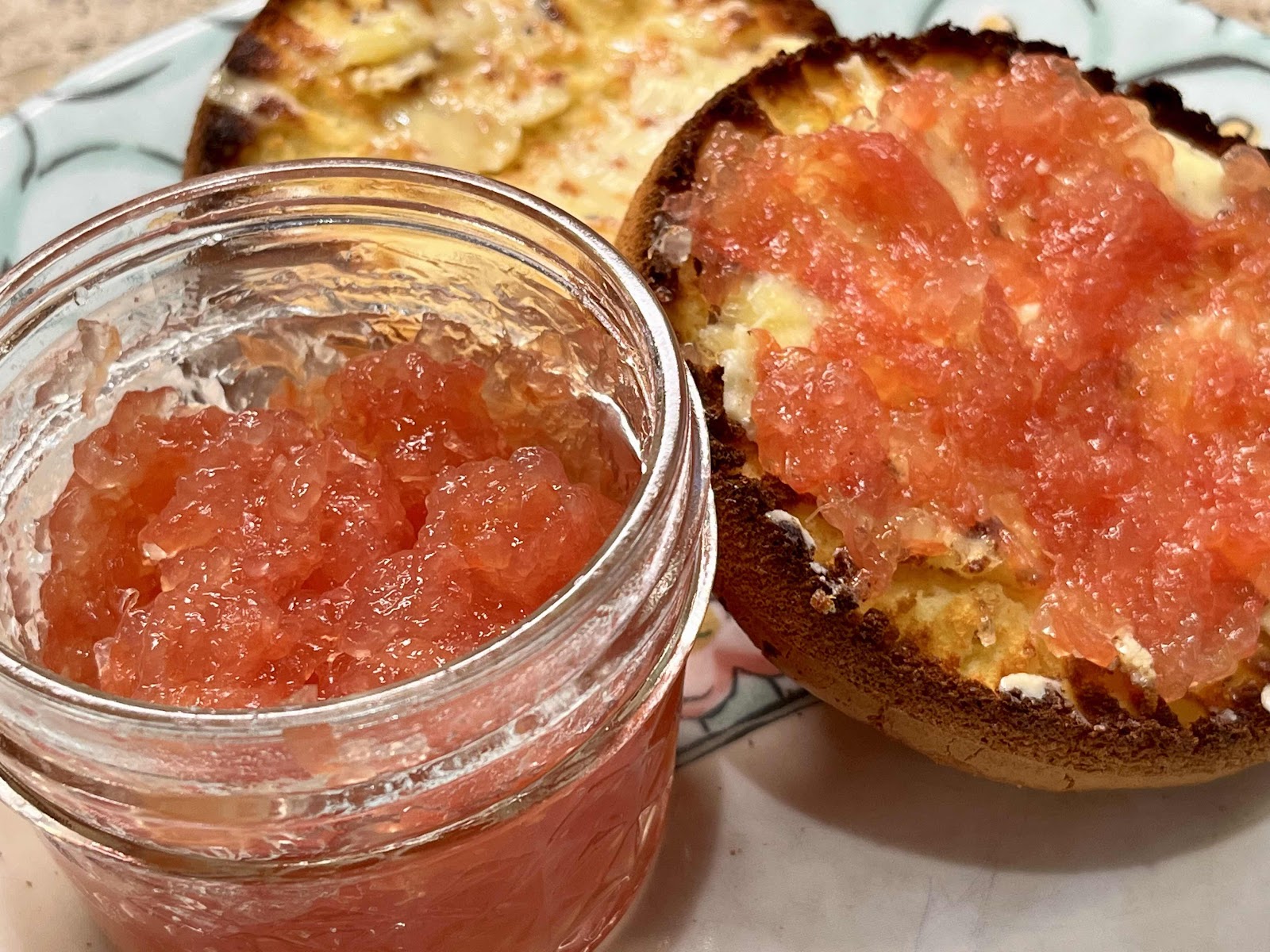
I am loving my sugar free jams and jellies! They are easy and fun to make. When you use naturally sweet ruby red grapefruit, this marmalade is not too tart and utterly refreshing. Winter is the best time for buying citrus fruits. They are in season and at their peak of sweetness! This grapefruit marmalade is delicious served on low carb bread, crackers and pancakes, but it’s also excellent mixed with sugar free BBQ sauce and used as a glaze on ribs, chicken or pork tenderloin. 

Sugar Free Pink Grapefruit Marmalade 
Makes 4-5 half-pint jars

5-6 large red grapefruit, supremed (all rind and membrane removed and discarded)
2 tablespoons bottled lemon juice
3 teaspoons calcium water (see Step #1)
1 cup allulose (or substitute ½ cup allulose-based honey + ½ cup granulated allulose)
4 teaspoons Pomona’s Universal Pectin powder (made especially for low to no sugar jams)
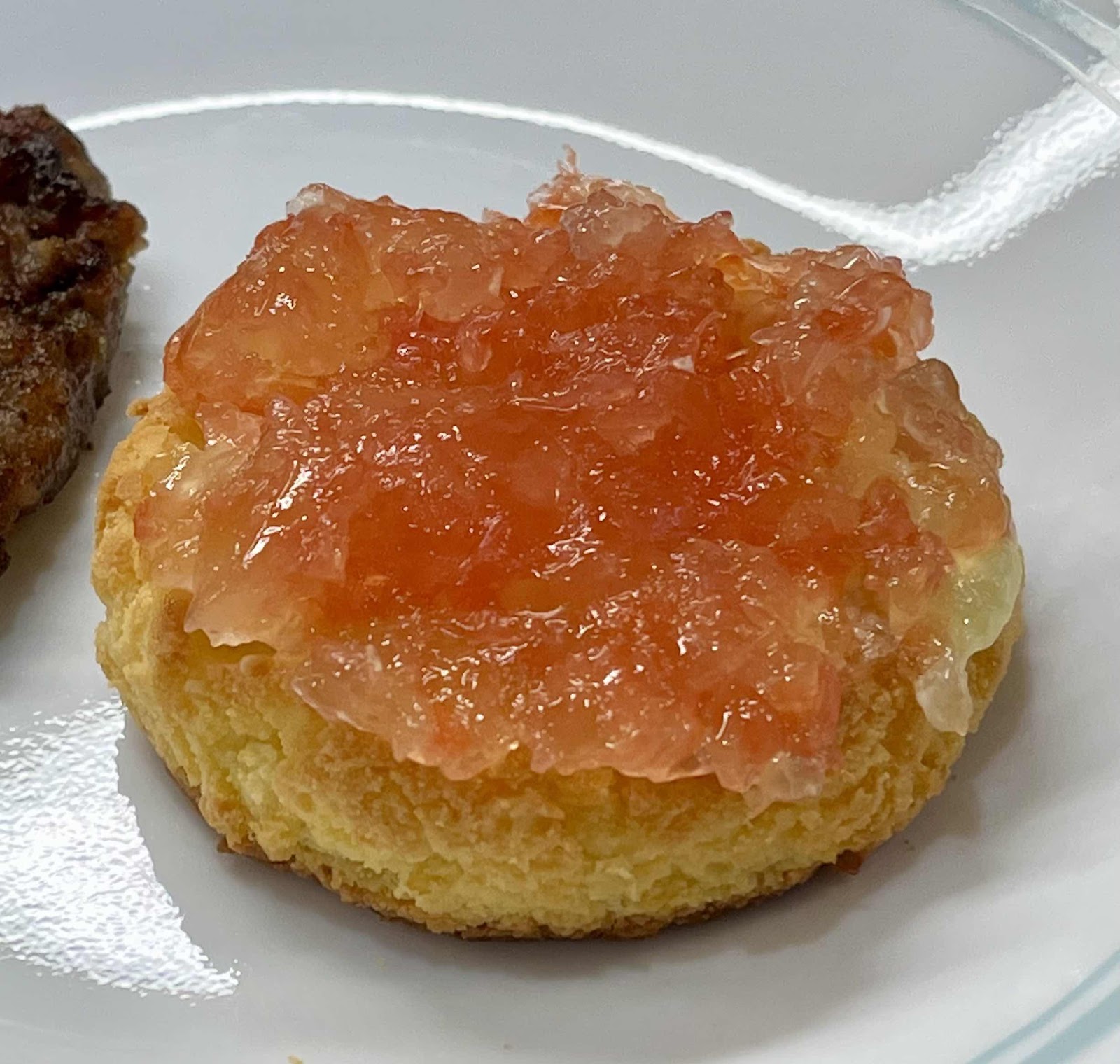
Grapefruit Marmalade on a keto biscuit
1. Before you begin, prepare the calcium water. To do this, combine ½ teaspoon calcium powder (in the small packet that comes in the box of Pomona’s Universal Pectin) with ½ cup water in a small jar with a lid. Shake well. (Extra calcium water can be stored in the refrigerator indefinitely for future use.)
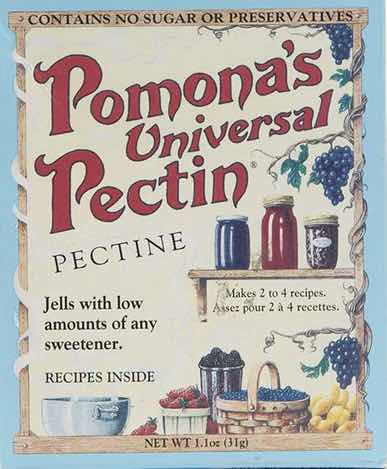
Pomona’s Universal Pectin
2. Wash your canning jars, lids and bands. Place jars in a stock pot or canner, filled with water about 2/3 full, and bring to a boil. Boil for 10 minutes to sterilize your jars. Turn off the heat, cover, and keep jars in the hot water until ready to use. Place lids and bands in water in a small saucepan, cover and heat to simmer. Turn off heat and keep lids in the hot water until ready to use.

3. Cut away the rind and section the grapefruit, discarding all of the membrane and rind. Break the grapefruit sections into chunks and place them in a large measuring cup; you will need 4 cups of grapefruit and any accumulated juices. Place the 4 cups of grapefruit pieces and accumulated juice in a large saucepan with the lemon juice and calcium water. Mix well. Bring to a boil over high heat, stirring occasionally to prevent the grapefruit from scorching. 

4. Meanwhile, in a separate bowl, mix together the allulose and Pomona’s Universal Pectin powder, stirring to combine. (If you like the flavor of honey with your grapefruit, you can substitute ½ of the sweetener with sugar free allulose honey.)

5. Once the grapefruit mixture is boiling rapidly, slowly add the allulose and pectin mixture, stirring continuously until the sweetener and pectin have dissolved. Bring the mixture back up to a full boil, stirring constantly. Once the marmalade returns to a full boil, that cannot be stirred down, boil for one minute and remove move it from the heat. (If needed, skim any foam and discard.)

6. Fill hot, sterilized jars to 1/4” from the top. Wipe rims clean with a wet paper towel. Place a lid on each jar and then screw on a rim just until finger-tight. Put the filled jars into boiling water to cover. Boil for 10 minutes (add 1 more minute for every 1000 feet above sea level). Turn off heat and allow the jars to rest in the hot water for five minutes. (Note: if you don’t want to process the marmalade in a boiling water bath, you can put it in the refrigerator once it is cooled and it will keep for three weeks. You can also freeze the marmalade instead of canning it. For freezing, fill jars to 1/2 inch from top. To prevent the glass jars from cracking, freeze jars without a lid to allow for expansion, then screw on a lid once frozen. Defrost in the refrigerator before eating.)

7. Remove jars from hot water using a jar lifter tool and place them on a kitchen towel. Let the jars cool undisturbed on the kitchen counter for 12 to 24 hours. Check seals; lids should be sucked down and not move or click when pressed in the center. Properly sealed jars can be stored at room temperature for one year. Once opened, refrigerate and consume within three weeks. (Note: It is normal for this marmalade to separate as it cools. Simply stir before serving.)
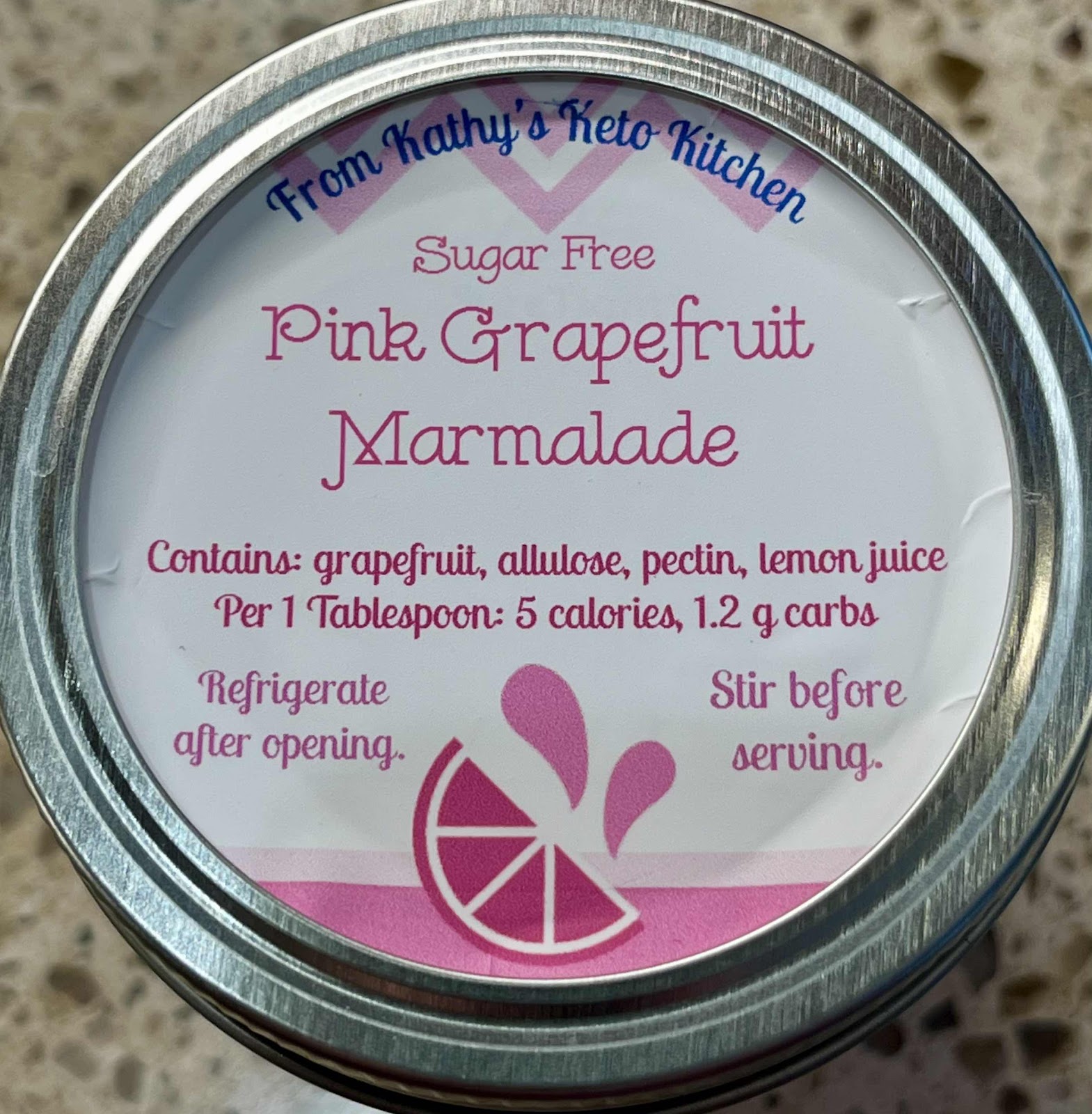
Pink Grapefruit Marmalade Label
Nutritional Information per 1 tablespoon: 5 calories, 1.4 g carbohydrate (0.2 g dietary fiber, 0.9 g sugars), 0 g total fat, 0 mg cholesterol, 0 mg sodium, 1.6 mg calcium, 18 mg potassium, 35 IU Vit A, 5 mg Vit C, 0 g protein. Net carbs per serving: 1.2 grams

Recipe and photos by Kathy Sheehan, copyright 2023
All rights reserved. Please do not duplicate without the author’s permission.

Saturday, January 25, 2014

Drink Your Vegetables!


This is a continuation of the "Love Your Vegetables" post from last week and the theme this week is juicing.  What's all the hype about?  Many doctors recommend it as an additional way to get the micro-nutrients in fruits and vegetables.  Those micro-nutrients are easier to absorb without the bulk of fiber that accompanies the fresh produce.  But is it a healthy idea, especially for someone who has problems metabolizing carbohydrates?  Making fresh juice appealed to me, so I talked to my doctor about it and this is what he said:  Yes, juicing vegetables is an excellent idea but, because of the high sugar content of fruit, it should be limited, preferably to lower glycemic fruit that includes green apples, berries, cherries, grapefruit, lemons and limes.  Fresh vegetable juices can be tolerated and beneficial, if a person's blood sugar is fairly well managed.  For someone whose blood glucose isn't stable, drinking green smoothies might be a better choice.

I've been vegetable juicing now for several months and I've seen a reduction in my high blood pressure and I have more energy throughout the day.  My blood glucose readings have remained in the normal range and I enjoy making fresh juice!  I love that I can drink the nutrients from an entire, heaping plate of vegetables (see photo above). From my experience, the more vegetables I can consume, the better my health and well-being!

Before you run out to buy a juicer, here are some tips I would suggest:

1.  Do your homework before buying!  There are several types of juicers available that work in different ways and at various prices.  I'm not going to go into a whole lesson here, but I highly recommend that you consider carefully before investing in a juicer.  My #1 Rule: Try vegetable juicing without a juicer first, to see if you like the taste, before buying!  Try this method for several weeks to see if you're really serious or if the idea was a passing fancy. (See directions below for how to make juice without a juicing machine.)

2.  Go into it with the knowledge that you'll be juicing mostly vegetables, with maybe a small amount of fruit for sweetness.  If additional sweetness is desired, add drops of liquid Stevia to taste.

3.  To minimize a blood sugar spike, don't drink juice alone or an entire batch at once.  Combine an 8 ounce glass of fresh juice (or less) with a meal or snack that contains some protein and/or fat.  If you've made more than 8 ounces, pour the remainder into a glass water bottle, place it in the refrigerator and have a little with every meal throughout the day with the idea of consuming the entire batch within 24 hours for the most nutritional impact.  For a diabetic, it can be better tolerated to add back some of the fiber removed by juicing.  For example, sometimes I stir a spoonful of fiber powder into my fresh juice before drinking, especially if it contains a higher glycemic fruit.

4.  Test your blood sugar level 1 and 2 hours after consuming juice.  This will tell you how your body reacts to juice and whether it can be tolerated.  After two hours, your blood sugar reading should be below 150 or back to normal.

5.  Finally, vegetable juicing doesn't replace eating vegetables!  Fresh vegetables and fruit contain much needed fiber, that's often lacking from the standard diet.  Juicing is just another way to add more vegetables and their healthy micro-nutrients to your diet in a rather pleasant way.

RECIPE IDEA:  Green Lemonade!


Typically, I juice whatever vegetables I have on hand at the moment and throw in a clementine and lemon or green apple.  I have found that I can juice parts of a vegetable I normally wouldn't eat, such as broccoli stalks or the woody ends of asparagus.  In this recipe, the tart lemon becomes the predominate flavor that hides the more earthy or pungent flavors of the vegetables.  With a few drops of liquid Stevia, lemonade is the result!

Green Lemonade
Makes 2 servings

1 clementine
3 stalks of celery
1/4 savoy cabbage (or 2 cups other leafy greens)
2 carrots
1/2 or 1 small lemon, with peel
1/2 cucumber or zucchini
2 broccoli stalks (about 1-1/2 cups)
4-6 drops of liquid Stevia or to taste (add after juicing)

Wash and cut vegetables to the size that will feed into your juicer.  According to the manufacturer's instructions, juice the vegetables.  Add Stevia and stir.  Pour over ice and serve immediately.

To make juice without a juicing machine:  Cut up all of the vegetables and fruit and place into a blender.  Add enough water to allow the mixture to swirl freely.  Blend on high until mixture is smooth.  Strain through a couple of layers of cheese cloth or a nut milk bag until all the liquid has been extracted.  You may need to gently massage and squeeze the bag to drain thoroughly.  Add Stevia to taste and serve over ice.

Nutritional Information per serving: 71 calories, 21.3 g carbohydrate (1 g dietary fiber, 9 g sugars), 0.7 g total fat (0 g saturated fat), 0 mg cholesterol, 113 mg sodium, 115 mg calcium, 132.3 mg vitamin C, 830 mg potassium, 5 g protein.

Recipe by Kathy Sheehan, copyright 2014.

Tuesday, January 5, 2010

Poached Fish in Wine with Caramelized Onions & Grapefruit

Every year, my husband's parents treat us with a huge box of the best ruby red grapefruit I've ever tasted. It is as sweet as candy and most evenings my husband will peel and section one for us to share. It is a light and refreshing dessert that helps to bring a little of the long forgotten sunshine to the darkest days of our Maine winter.

This is the season for buying the juiciest and sweetest grapefruit of the year, so stock up. Store in a cool, dry place (we keep ours in a part of our basement that gets only a little heat but won't freeze), and they will last for a couple of weeks. Red grapefruit is sweeter than the white variety and is packed with vitamin C and fiber. Besides just peeling and eating for breakfast or juicing, most people can't think of another way to eat grapefruit. It can be difficult to incorporate it into a hot recipe because, once heated, it will fall apart easily. The trick is to add it during the last minutes of cooking or, as suggested in this recipe, sprinkle sections with brown sugar or honey and place under a broiler. It is simply delicious prepared in this way!

Poached Fish in Wine with Caramelized Onions & Grapefruit
(Makes 2 servings)

8 ounces mild white fish (tilapia, halibut or haddock)
½ medium onion, chopped
1 teaspoon olive oil
Pinch of salt
¼ cup sweet wine or sherry
2 tablespoons orange juice
2 tablespoons chicken or vegetable stock
1 teaspoon red or white wine vinegar
1 cup grapefruit sections
2 teaspoons honey or brown sugar

1. Choose an oven-proof skillet just large enough for the fish to be side by side in the pan. (I used an 8-inch cast iron skillet.) Heat olive oil in pan and add chopped onion. Sprinkle with salt and cook on low heat, stirring occasionally, until onions are soft, lightly browned and caramelized, about 10 minutes.

2. Meanwhile, mix together the wine, juice, stock and vinegar in a measuring cup and stir to combine; set aside. When the onions are soft, remove and add them to the wine mixture. Turn up heat to medium and place the fish into the skillet and season with a little salt and pepper. Cook briefly for 1-2 minutes, turn fish and add poaching liquid to pan and bring to a boil. Simmer until liquid is reduced by half. Add grapefruit sections to cover fish and spoon the cooking liquid over sections. Drizzle honey or brown sugar over the grapefruit and place skillet in the oven under a broiler until honey or sugar is bubbly and starting to brown. Divide fish, sauce and grapefruit equally between two dinner plates and serve immediately.

Nutritional Information per serving: 229.5 calories, 21 g carbohydrate, 4.2 g total fat, 1 g saturated fat, 1.5 g fiber, 23.7 g protein

Original recipe by Kathy Sheehan, copyright 2010