Showing posts with label orange. Show all posts

Friday, November 19, 2021

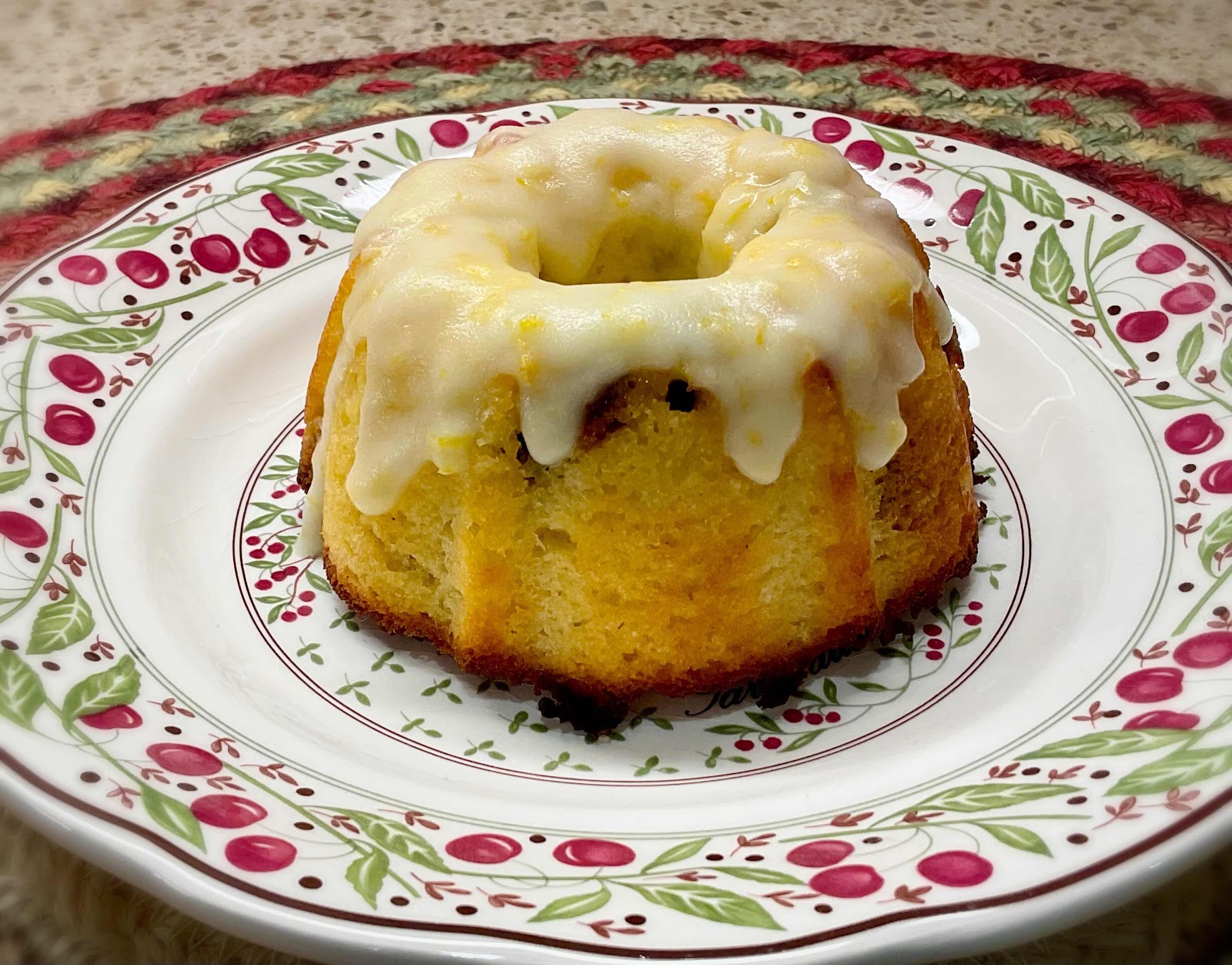
Keto Mini Cranberry Orange Bundt Cakes (Nut free!)

Keto Mini Cranberry Orange Bundt Cakes
Every year I make a batch of sugar-free dried cranberries to use in my recipes and baking for the holiday season. (Click here for the best recipe I’ve found and the one I have used for years, by Carolyn Ketchum.) These little cakes are a great way to use these tart, ruby red berries. I love the combination of orange and cranberry, especially around Christmas time. Serve these cakes as a dessert or with coffee for breakfast. Either way I think you and your family will love them as much as I do! (Tip: Double the recipe to make 4 mini cakes and triple the recipe if you’d like to make a full-size bundt cake and extend the baking time accordingly.)

Keto Mini Cranberry Orange Bundt Cakes (Nut Free!)
Makes four servings. (1/2 mini cake per serving)

Cakes:
1/4 cup plus 2 teaspoons coconut flour (32 grams in weight)
1/4 cup erythritol or allulose sweetener 
2 tablespoons unflavored whey protein powder
1 teaspoon baking powder
A pinch of salt
2 tablespoons sugar free dried cranberries, chopped
Zest of 1/2 orange (reserve 1/2 teaspoon for glaze)
2 eggs, room temperature 
2-1/2 tablespoons unsalted butter, melted and cooled
2 tablespoons fresh orange juice (or orange spice herbal tea, brewed and cooled, for slightly lower carbs, see note*)
1 tablespoon water
1/2 teaspoon orange extract (or 3-4 drops orange essential oil)

Glaze:
1/4 cup powdered erythritol or powdered allulose sweetener 
1/2 teaspoon reserved orange zest
1/8 teaspoon orange extract (or 1-2 drops orange essential oil)
1 tablespoon coconut or almond milk

1. Preheat the oven to 325°F and grease two (4” wide by 2” deep) mini bundt cake pans well; set aside. (This recipe can also be baked into muffins or donuts, just reduce the cooking time accordingly.)

2. In a small bowl, whisk together the coconut flour, sweetener, whey protein powder, baking powder and salt. Add the dried cranberries and orange zest and stir until the cranberries are coated in the flour mixture.

3. In a medium or larger bowl, beat the eggs well. Add the melted butter, orange juice or tea, water and orange extract until well combined. Add the dry ingredients all at once and beat just until there are no lumps and the batter is smooth. Do this quickly before the coconut flour absorbs the liquid and thickens the batter.
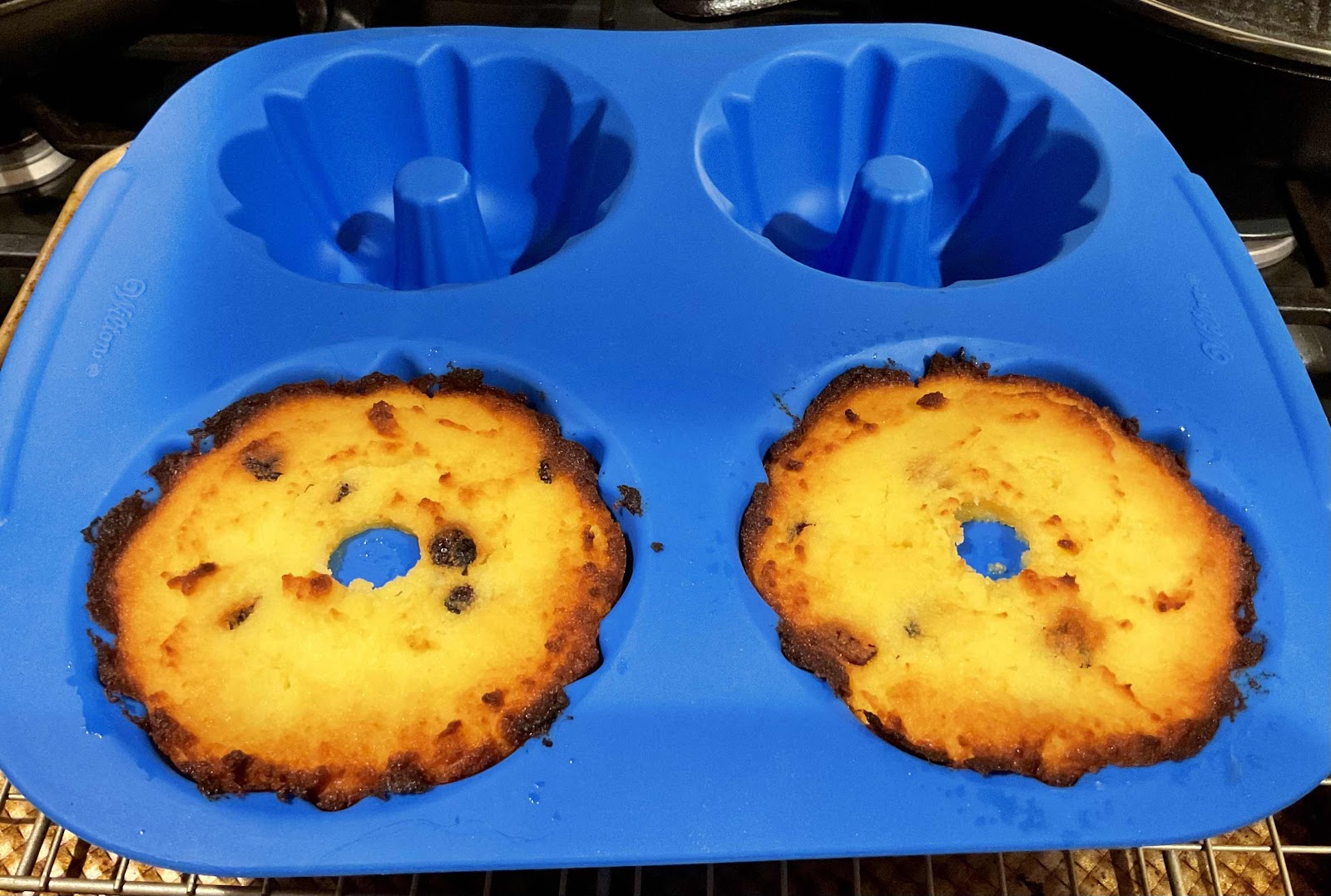
Silicone Mini Bundt Baking Pan
4. Divide the batter evenly among the pans and spread to the edges. Smooth the tops with the back of a small spoon. Bake 25 to 28 minutes, until lightly browned around the edges and the tops are just firm to the touch and a toothpick in the center comes out clean. (The baking time may be different if using a metal baking pan, so watch carefully and do not overbake.)

5. Remove from the oven and let cool in the pans for 10 minutes before flipping the mini cakes onto a wire rack. Cool completely before drizzling the glaze over the top, allowing some drips to cascade down the sides.
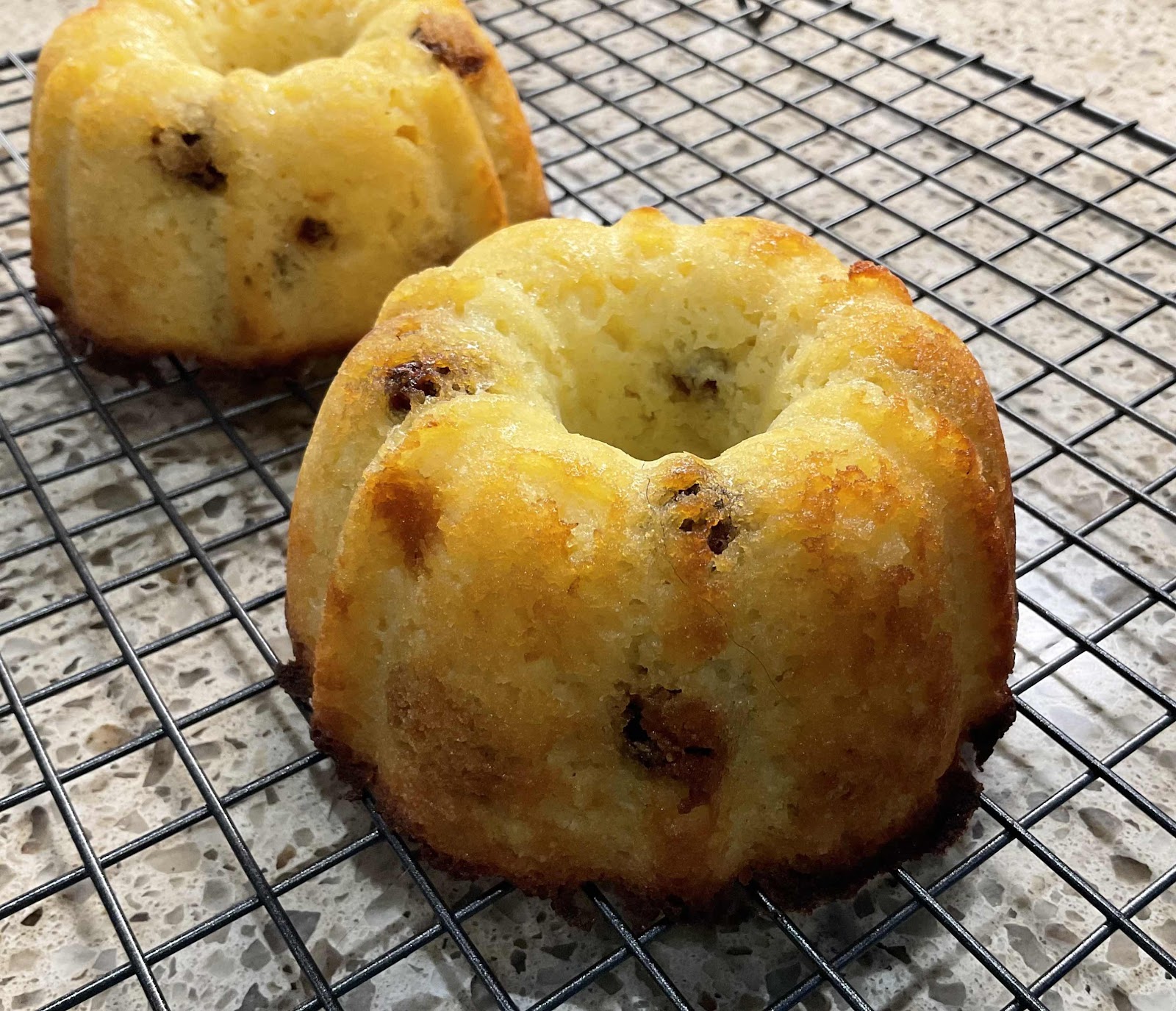
Baked Mini Bundt Cakes
6. To make the glaze: Whisk together all of the glaze ingredients until a pourable, but slightly thick glaze is created. If too thin, add more powdered sweetener. If too thick, add more milk, a tiny bit at a time.

7. When is the best time to drizzle the glaze? If you glaze the cakes too far ahead, the glaze will soak into the cakes as it sits and become translucent. Still quite delicious, but not creamy looking and cascading beautifully down the sides. If you want the glaze to be quite noticeable, as in the picture, then glaze the cakes just prior to serving. The best alternative is to use half the glaze and allow it to soak in to keep the cakes moist and then, just before serving, drizzle the remaining glaze over the top for a beautiful presentation.

*Note: The 2 tablespoons of real orange juice add 3 carbs to the entire recipe, so 3/4 (0.75) carb per serving. If you wish, you can substitute orange spice herbal tea that has been brewed and cooled and subtract 0.75 carb from the nutritional information provided.
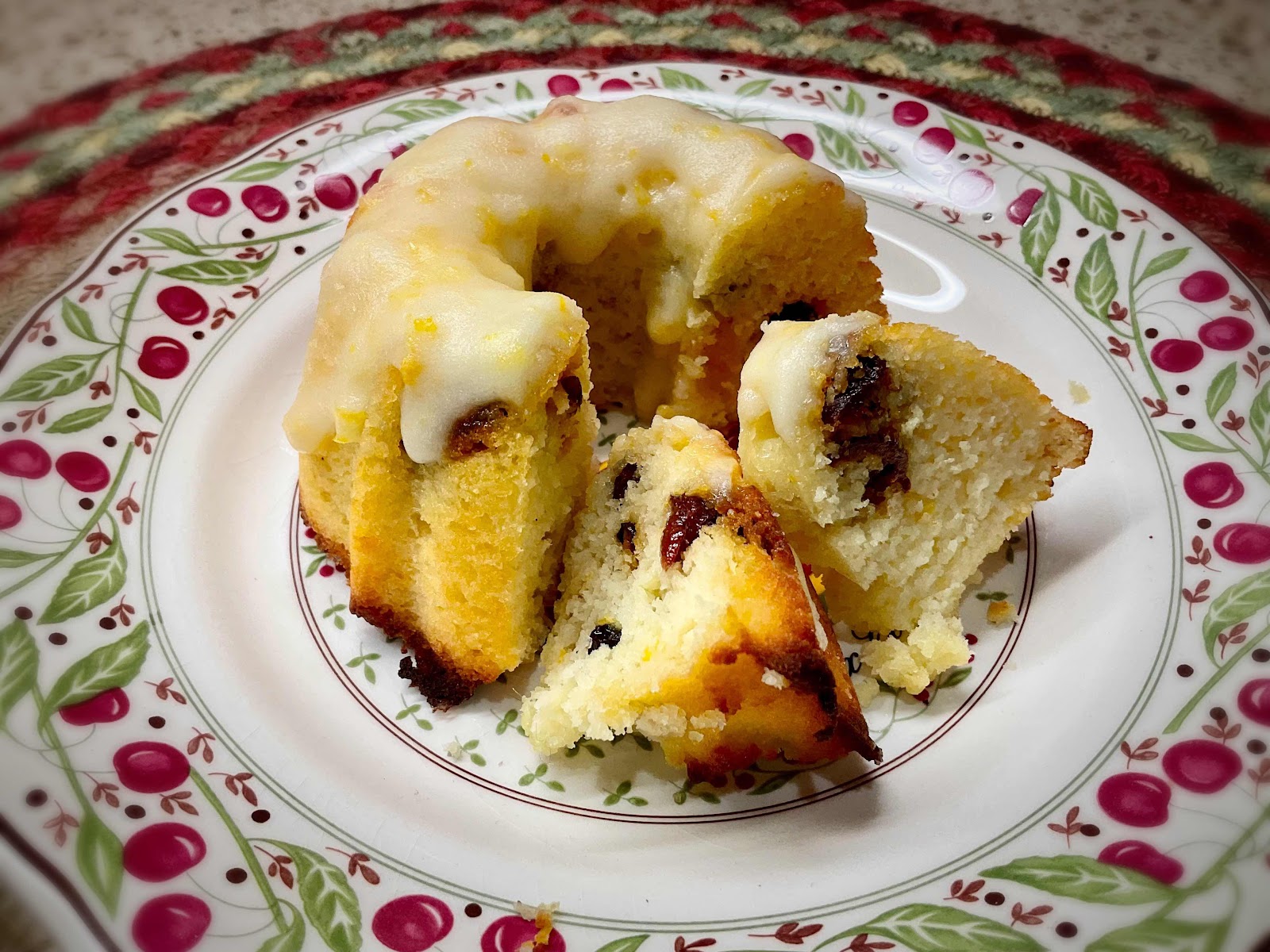
Interior of Mini Bundt Cake
Nutritional  Information per serving (1/2 mini cake): 147 calories, 8.4 g carbohydrate (3.5 g dietary fiber, 1.4 g sugars, 1 g sugar alcohols), 11 g total fat (6.6 g saturated fat, 0 g trans fat), 112 mg cholesterol, 174 mg sodium, 111.4 mg calcium, 61 mg potassium, 1 mg iron, 113 IU Vit A, 5 mg Vit C, 5.7 g protein. Net carbs per serving: 3.9 grams

Photos and recipe by Kathy Sheehan, copyright 2021
All rights reserved. Please do not duplicate without the author’s permission. 

Monday, November 20, 2017

Low Carb Cranberry Orange Pound Cake

Low Carb Cranberry Orange Pound Cake
If you haven’t made some sugar free dried cranberries for the upcoming holiday season of baking, it’s time! (Click here for the recipe.) They’re easy to make and so versatile. This delicious pound cake is just one recipe in which these sweet-tart berries can be the star of the show. 

Low Carb Cranberry Orange Pound Cake
Makes 12 servings

1-3/4 cup almond flour
1/4 cup coconut flour
3/4 teaspoon stevia powder (I used SweetLeaf brand)
2 teaspoons baking powder
1/2 teaspoon salt
1/4 cup butter (1/2 stick), room temperature
4 ounces cream cheese, room temperature
1/3 cup granulated erythritol (I used LaKanto Monkfruit sweetener)
4 large eggs, room temperature
1 tablespoon almond or coconut milk
1/2 teaspoon orange extract
1/2 teaspoon lemon extract
1 teaspoon orange zest
1/3 cup sugar free dried cranberries, chopped (see separate recipe here)
3 tablespoons chopped pecans

1. Preheat oven to 350 degrees Fahrenheit. Grease an 8x4 inch loaf pan.

2. In a medium bowl, whisk together the almond flour, coconut flour, stevia, baking powder and salt. Whisk until no lumps remain; set aside.

3. Using a handheld or standing mixer, cream together the butter, cream cheese and erythritol in a large mixing bowl until fluffy and well combined. Add the eggs one at a time, beating between each addition. Add the almond or coconut milk, orange and lemon extracts and beat until incorporated and batter is smooth.

4. Add the dry ingredients and orange zest to the wet ingredients and beat on medium speed until well combined. Fold in chopped cranberries and pecans. The batter will be thick.

5. Transfer the batter to the prepared loaf pan. Smooth the top and bake for 45-50 minutes. The cake should be deep golden brown and when you stick a toothpick in the center, it should come out clean. Cool the cake in the loaf pan for about 20 minutes, then remove from pan and cool completely on a wire rack before slicing.

Nutritional Information per serving (1/12th of recipe): 183 calories, 9.6 g carbohydrate (3.2 g dietary fiber, 1.1 g sugars, 5.3 g sugar alcohols), 16 g total fat (5.8 g saturated fat, 0 g trans fat), 84 mg cholesterol, 228 mg sodium, 102.4 mg calcium, 110 mg potassium, 1 mg iron, 302 mg Vit A, 5.8 g protein. Net carbs per serving: 6.4 grams

Recipe and photos by Kathy Sheehan, copyright 2017
All rights reserved. Please do not duplicate without the author’s permission.

Thursday, November 2, 2017

Cranberry Nut Donuts with Orange Glaze

Cranberry Nut Donuts with Orange Glaze
For me, tart cranberries with nuts and sweet orange are an autumn or holiday flavor combination. For many years, I’ve avoided using dried cranberries due to their extremely high sugar and carb content. (You’d think that someone would have figured out to make dried cranberries without sugar, but I guess not. I’ve searched and they are not available in stores or online.) The other day, I discovered a very easy recipe for making my own sugar-free dried cranberries at home (click here for the recipe) and they turned out perfectly! I’m so delighted once again to have this pantry staple on hand to use in muffins, salads, cookies and my husband’s famous Thanksgiving dressing. Also, because they are so delicious, I was inspired to use them this morning to create these marvelous low carb donuts. I’m ready now! Bring on the holidays!!

Cranberry Nut Donuts with Orange Glaze
Makes 6 donuts (more or less, depending on your pan)

1/2 cup almond flour
1 tablespoon coconut flour
1 tablespoon unflavored whey protein powder
1 tbsp + 1 tsp granulated erythritol (I used LaKanto Monkfruit Sweetener)
3/4 teaspoon stevia powder (I used SweetLeaf brand)
1 teaspoon baking powder
A pinch of salt
2 tablespoons butter, melted
1 large egg, lightly beaten
2 tablespoons water
1/8 teaspoon orange extract
1 teaspoon orange zest
2 tablespoons finely chopped pecans
3 tablespoons sugar free dried cranberries, chopped (see recipe here)

Orange Glaze:

1/4 cup powdered erythritol (I used Swerve Confectioner’s)
1 tablespoon orange juice (or water)
1/8 teaspoon orange extract (if using water, increase to 1/4 teaspoon)

1. For the donuts, lightly grease a donut baking pan and preheat the oven to 325 degrees Fahrenheit. In a medium bowl, whisk together the almond flour, coconut flour, whey protein powder, erythritol, stevia, baking powder and salt until no lumps remain and the ingredients are well combined.

2. In a separate small bowl, whisk together the melted butter, egg, water, orange extract and orange zest. Add the wet ingredients to the dry ingredients and whisk thoroughly to combine. Fold in the chopped pecans and cranberries until well distributed.

3. Fill the donut holes approximately 2/3 to 3/4 full (do not overfill). Bake for 16-18 minutes or until the donuts are browned on the edges and spring back when touched. Let cool in the pan for 5 minutes, then flip out onto a wire rack to cool completely before glazing.

4. To make the glaze, whisk together the powdered erythritol, orange juice and extract in a shallow bowl until smooth. If too thin, add more erythritol. If too thick, add more liquid, a few drops at a time, until the desired consistency is reached.

5. Dip the tops of the cooled donuts into the glaze. (Be sure to hold the donuts carefully because they may be delicate. The distribution of the cranberries and pecans might have created some weak spots and you don’t want them to fall apart.) Place the glazed donuts on a wire rack for a few minutes until the glaze is set. Leftover donuts can be stored in an airtight container at room temperature for up to 2 days.

Cranberry Nut Donuts with Orange Glaze
Nutritional Information per donut (based on six per recipe): 127 calories, 6.8 g carbohydrate (2.1 g dietary fiber, 1.1 g sugars, 8 g sugar alcohols), 11.2 g total fat (3.4 g saturated fat, 0 g trans fat), 41 mg cholesterol, 107 mg sodium, 31.6 mg calcium, 104 mg potassium, 1 mg iron, 175 mg Vit A, 3 mg Vit C, 3.9 g protein. Net carbs per serving: 4.7 grams

Recipe and photos by Kathy Sheehan, copyright 2017
All rights reserved. Please do not duplicate without the author’s permission.

Friday, December 23, 2016

Kefir Orange Julius Smoothie


I've always enjoyed the flavor combination of orange and vanilla. When I was a kid, I would always choose a creamcicle push-up when the ice cream truck came through our neighborhood. And when I was a teenager spending my own money at the mall, an Orange Julius was worth the expense, even on my limited budget! Right now, there's a very juicy and sweet seedless tangerine available at my local Whole Foods called Satsuma Mandarins (see photo below). They're only around for a short time and, although I normally don't eat a lot of fruit, this is one fruit I look forward to every year and enjoy in moderation only during this season. This kefir smoothie has the taste of an authentic Orange Julius! It's frothy and sweet with the perfect blend of orange and vanilla, just as I remember. The orange oil or extract is important to give this recipe the orange punch of the original drink. I used a few drops of culinary orange oil, which is available through specialty cooking stores or on the internet, but regular orange extract that you can find at any grocery store will work too, just make sure it's pure orange extract, not imitation flavoring. This recipe makes about 3 servings, so you can share it or save some for later. It makes a delicious breakfast smoothie, afternoon snack or healthy dessert.


Kefir Orange Julius Smoothie
Makes 3 servings (about 1 cup each)

1-3/4 cup plain milk kefir, unsweetened
1 peeled seedless mandarin orange (or small navel orange)
1/4 cup water
2 tablespoons heavy cream (or full-fat coconut milk)
6 drops of Valencia Orange stevia
1-1/2 teaspoon vanilla extract
2-4 drops of orange oil (or 1/8 teaspoon orange extract), to taste
1/4 teaspoon stevia powder, or to taste (I used Sweet Leaf brand)
4-5 ice cubes
1 tablespoon coconut or flax oil (optional)
1 scoop prebiotic powder (optional)

Place all of the ingredients in a blender and blend until smooth. Taste and adjust flavorings and sweetness, if desired. Serve immediately or store in a glass jar in the refrigerator for up to 2 days.

Nutritional Information per 1 cup serving (no optional ingredients): 146 calories, 6.8 g carbohydrate (0.5 g dietary fiber, 6.8 g sugars), 8.5 g total fat (3.5 g saturated fat, 0 g trans fat), 28 mg cholesterol, 56 mg sodium, 140.1 mg calcium, 213 mg potassium, 346 mg Vit A, 8 mg Vit C, 5.7 g protein. Net carbs per serving: 6.3 grams

Recipe by Kathy Sheehan, copyright 2016
All rights reserved. Please do not duplicate without author's permission.

Thursday, December 31, 2015

Orange and Cranberry Nut Waffles


Creative Grain Free, Low Carb Waffles

I am so happy to announce that my first cookbook is now available as an e-book! I've been working on this project for many months, struggling to master the technology and learning so much along the way.  The book is entitled CREATIVE GRAIN-FREE, LOW CARB WAFFLES: Healthy Culinary Magic With Your Waffle Iron and is filled with many excellent recipes for low-carb living and includes a color photo of each recipe.  Each recipe is less than 10 carbs per serving, including desserts like pie and cake!  Many people think that waffles are only good for breakfast, but waffles are delicious at anytime of the day.  I use these grain-free waffles as a substitute for bread in sandwiches and have even made amazing low-carb desserts with them!  I hope that you'll hop over to the iBooks store or the Amazon website to check out the new book. Thank you! I appreciate your support and please tell your friends!


To celebrate the release of the book, I'm sharing a new waffle recipe below.  This Cranberry Nut Waffle was created after the completion of the book, so think of it as a bonus!  It's just as delicious as my other waffles and has been a favorite lately since fresh cranberries are abundant right now.  When you want to keep a breakfast of waffles low carb, it's important to find an alternative to maple syrup, which is over 50 grams of carb per 1/4 cup!  For this waffle, I created a creamy cranberry spread to use as a topping.  It's a great way to start your morning...and the new year.  Have a happy and healthy 2016!

Orange Cranberry Waffles

Grain-Free, Low Carb Orange and Cranberry Nut Waffle (or Pancakes)
Makes 2 waffles (6.5-inch round) or 8 small pancakes
Serving size: 1/2 waffle or two small pancakes

1/4 cup nut butter of choice (almond, cashew, but not peanut butter)
3 tablespoons of finely chopped walnuts
1/4 cup fresh cranberries (measure first, then chopped fine)
2 teaspoons orange zest
1 large egg
1/2 tablespoon apple cider vinegar
1/4 + 1/8 teaspoon stevia powder (I used Sweet Leaf brand)
5 drops liquid stevia drops (Valencia Orange or regular), or to taste
A pinch of salt
1 tablespoon melted butter or ghee (use coconut oil for dairy-free)
2 tablespoons non-dairy milk or fresh squeezed orange juice
1/8 teaspoon baking soda

Mix together all of the ingredients in a mixing bowl and whisk until blended. Cook on your preheated waffle iron according to the manufacturer's instruction for your waffle iron or cook on a hot griddle for pancakes. Serve immediately or store in an airtight container in the refrigerator for up to 4 days.  To reheat, toast the waffles on the lightest setting of your toaster and watch carefully to prevent burning.

Nutritional Information per 1/2 waffle or 2 small pancakes (no topping): 188 calories, 4.9 g carbohydrate (1.7 g dietary fiber, 0.6 sugars), 17.6 g total fat (4.2 g saturated fat, 0 g trans fat), 54 mg cholesterol, 92 mg sodium, 30.6 mg calcium, 99 mg potassium, 4.9 g protein.  Net carbs per serving: 3.2 grams

Cranberry Cream Cheese Spread
Makes 4 servings
Serving size: 2 Tablespoons

1/2 cup cream cheese (choose non-dairy, if needed)
1/4 cup fresh cranberries (measure first, then chopped fine)
1/4 teaspoon stevia powder (I used Sweet Leaf brand)
1/4 teaspoon vanilla extract

Mix all of the ingredients together in a small bowl until well combined. Chill until ready to serve.

Nutritional Information per serving (2 TB): 73 calories, 2.6 g carbohydrate (0.2 g dietary fiber, 0.2 g sugars), 8 g total fat (3.5 g saturated fat, 0 g trans fat), 15 mg cholesterol, 170 mg sodium, 20.4 mg calcium, 5 mg potassium, 2 g protein. Net carbs per serving: 2.4 grams

Recipes by Kathy Sheehan, copyright 2016

Wednesday, September 17, 2014

Lamb Chops with Orange, Rosemary and Butter Sauce


I'm celebrating tonight after a good doctor's visit that brought excellent news!  My lab results show that the changes I've made in my diet to reduce carbs combined with moderate protein and increased fat over the past five months are working.  My A1c dropped to 5.8 and I'm being taken off all diabetic medication!  This is a special recipe for a special occasion.  Lamb can be a bit pricey, but if you choose a shoulder blade instead of a the smaller chop, you'll save money and get a tasty cut of meat.  Ever since experiencing lamb during a trip to Iceland a few months ago, I've fallen in love!  Honestly, the best free range lamb on the planet comes from Iceland.  I was thrilled to see Icelandic lamb available for a limited time at my local Whole Foods Market.  I had to create the best recipe, since it's a rare treat, and this definitely meets with my approval.  If you can't get good lamb, this sauce is equally delicious over pork chops or chicken.

Lamb Chops with Orange, Rosemary and Butter Sauce
Makes 2 servings

2 shoulder blade lamb chops (about 6 oz each)
Salt and pepper
onion powder
1 tablespoon ghee or butter*
1 teaspoon orange zest
2 tablespoons freshly squeezed orange juice
1/4 cup chicken stock*
2 tablespoons high fat coconut milk or heavy cream*
1 teaspoon chopped fresh rosemary (or 1/2 teas dried)
1/4 teaspoon xanthan gum or low carb Thick It Up thickener (or 1/2 teas cornstarch or arrowroot)

1. Generously season the chops with salt and pepper, and lightly sprinkle with onion powder; set aside.

2.  In a heavy saucepan, melt the ghee or butter over medium heat.  Add the chops and cook, without turning, for at least 5 minutes.  When browned, turn and continue cooking for another 3 minutes.  Cover and cook for 2-3 minutes or until done to your taste.

3.  Meanwhile, zest the orange and chop the rosemary; set aside.  Cut the orange and squeeze 2 tablespoons of the fresh juice into a small bowl.  Add the stock and coconut milk to the juice; stir until blended.

4.  When the lamb chops are done, remove them to a serving plate.  Add the juice and stock mixture to the pan and whisk.  Add the zest and rosemary.  While whisking (important), sprinkle the xanthan gum into the sauce and stir until thickened.  (In order to prevent the xanthan gum from lumping, I use a small shaker top bottle and lightly sprinkle it while whisking vigorously.  Do not add it all at once because it might turn lumpy.  If using cornstarch or arrowroot, stir into a tablespoon or two of chicken stock until smooth, then add to the sauce in the pan.)

5.  Divide the butter sauce equally over the two chops and serve immediately.

Nutritional information per serving: 500 calories, 3 g carbohydrate (0.3 g dietary fiber, 1.9 g sugar), 37.6 g total fat (17.2 g saturated fat, 0 g trans fat), 144 mg cholesterol, 344 mg sodium, 59.2 mg calcium, 490 mg potassium, 35.4 g protein.  Net carbs per serving: 2.7 grams

* For those with food allergies: To create a dairy free version, use ghee (clarified butter) and coconut milk.  If gluten is a problem for you, choose a certified gluten free chicken stock.

Recipe by Kathy Sheehan, copyright 2014

Saturday, January 25, 2014

Drink Your Vegetables!


This is a continuation of the "Love Your Vegetables" post from last week and the theme this week is juicing.  What's all the hype about?  Many doctors recommend it as an additional way to get the micro-nutrients in fruits and vegetables.  Those micro-nutrients are easier to absorb without the bulk of fiber that accompanies the fresh produce.  But is it a healthy idea, especially for someone who has problems metabolizing carbohydrates?  Making fresh juice appealed to me, so I talked to my doctor about it and this is what he said:  Yes, juicing vegetables is an excellent idea but, because of the high sugar content of fruit, it should be limited, preferably to lower glycemic fruit that includes green apples, berries, cherries, grapefruit, lemons and limes.  Fresh vegetable juices can be tolerated and beneficial, if a person's blood sugar is fairly well managed.  For someone whose blood glucose isn't stable, drinking green smoothies might be a better choice.

I've been vegetable juicing now for several months and I've seen a reduction in my high blood pressure and I have more energy throughout the day.  My blood glucose readings have remained in the normal range and I enjoy making fresh juice!  I love that I can drink the nutrients from an entire, heaping plate of vegetables (see photo above). From my experience, the more vegetables I can consume, the better my health and well-being!

Before you run out to buy a juicer, here are some tips I would suggest:

1.  Do your homework before buying!  There are several types of juicers available that work in different ways and at various prices.  I'm not going to go into a whole lesson here, but I highly recommend that you consider carefully before investing in a juicer.  My #1 Rule: Try vegetable juicing without a juicer first, to see if you like the taste, before buying!  Try this method for several weeks to see if you're really serious or if the idea was a passing fancy. (See directions below for how to make juice without a juicing machine.)

2.  Go into it with the knowledge that you'll be juicing mostly vegetables, with maybe a small amount of fruit for sweetness.  If additional sweetness is desired, add drops of liquid Stevia to taste.

3.  To minimize a blood sugar spike, don't drink juice alone or an entire batch at once.  Combine an 8 ounce glass of fresh juice (or less) with a meal or snack that contains some protein and/or fat.  If you've made more than 8 ounces, pour the remainder into a glass water bottle, place it in the refrigerator and have a little with every meal throughout the day with the idea of consuming the entire batch within 24 hours for the most nutritional impact.  For a diabetic, it can be better tolerated to add back some of the fiber removed by juicing.  For example, sometimes I stir a spoonful of fiber powder into my fresh juice before drinking, especially if it contains a higher glycemic fruit.

4.  Test your blood sugar level 1 and 2 hours after consuming juice.  This will tell you how your body reacts to juice and whether it can be tolerated.  After two hours, your blood sugar reading should be below 150 or back to normal.

5.  Finally, vegetable juicing doesn't replace eating vegetables!  Fresh vegetables and fruit contain much needed fiber, that's often lacking from the standard diet.  Juicing is just another way to add more vegetables and their healthy micro-nutrients to your diet in a rather pleasant way.

RECIPE IDEA:  Green Lemonade!


Typically, I juice whatever vegetables I have on hand at the moment and throw in a clementine and lemon or green apple.  I have found that I can juice parts of a vegetable I normally wouldn't eat, such as broccoli stalks or the woody ends of asparagus.  In this recipe, the tart lemon becomes the predominate flavor that hides the more earthy or pungent flavors of the vegetables.  With a few drops of liquid Stevia, lemonade is the result!

Green Lemonade
Makes 2 servings

1 clementine
3 stalks of celery
1/4 savoy cabbage (or 2 cups other leafy greens)
2 carrots
1/2 or 1 small lemon, with peel
1/2 cucumber or zucchini
2 broccoli stalks (about 1-1/2 cups)
4-6 drops of liquid Stevia or to taste (add after juicing)

Wash and cut vegetables to the size that will feed into your juicer.  According to the manufacturer's instructions, juice the vegetables.  Add Stevia and stir.  Pour over ice and serve immediately.

To make juice without a juicing machine:  Cut up all of the vegetables and fruit and place into a blender.  Add enough water to allow the mixture to swirl freely.  Blend on high until mixture is smooth.  Strain through a couple of layers of cheese cloth or a nut milk bag until all the liquid has been extracted.  You may need to gently massage and squeeze the bag to drain thoroughly.  Add Stevia to taste and serve over ice.

Nutritional Information per serving: 71 calories, 21.3 g carbohydrate (1 g dietary fiber, 9 g sugars), 0.7 g total fat (0 g saturated fat), 0 mg cholesterol, 113 mg sodium, 115 mg calcium, 132.3 mg vitamin C, 830 mg potassium, 5 g protein.

Recipe by Kathy Sheehan, copyright 2014.

Sunday, September 22, 2013

Orange-Pecan Encrusted Salmon


Many years ago, I had a wonderful dinner at a restaurant in Damariscotta, Maine.  Unfortunately, that restaurant has since closed, but the happy recollection of that delicious meal lives on in my memory.  I remember a salmon fillet topped with a crunchy topping that included pecans and brown sugar (and probably crumbled Ritz crackers, too).  This recipe was inspired by that dish and is just as satisfying.  The addition of fresh fruit really escalates the complexity of flavors and the orange pairs beautifully with the salmon.  The topping mixture can be prepared ahead of time, making this a quick, fool-proof meal to throw together at the last minute.  Turn a week night into something special or dazzle company; whenever you serve this dish, you will see smiles!

Orange-Pecan Encrusted Salmon
Makes 2 servings

1 navel orange (seedless)
2 (5 oz.) center-cut salmon fillets, skin removed
1 teaspoon fresh orange zest (from orange)
2 tablespoons pecans, finely chopped
2 tablespoons gluten-free panko breadcrumbs
1-1/2 teaspoons coconut sugar
1-1/2 teaspoons coconut oil (melted), plus more to coat pan
salt and pepper to taste

1.  Preheat oven to 375-degrees F.  Zest the skin of the orange into a small bowl.  Add the chopped pecans, panko breadcrumbs and coconut sugar.  Add 1-1/2 teaspoons melted coconut oil and stir with a fork until well distributed and mixture resembles coarse crumbs.  Set aside.

2.  With coconut oil, grease a baking pan or individual casserole dishes; set aside.  Cut orange into four to six 3/8" slices (depending on size of orange), reserving the two rounded ends for juicing.  Stack slices and cut away the rind.  Place two or three orange slices in a row on the baking pan and repeat with remaining orange slices to create a second row (or line the bottom of your individual dishes with the orange slices). 

3.  Season both sides of one salmon fillet with salt and pepper and place it on a row of orange slices; repeat with remaining salmon fillet.  Take the reserved orange ends and squeeze fresh orange juice over each fillet.  Evenly divide the crumb mixture and spoon over the top of both fillets and press down lightly with your hand.  Bake in the preheated oven for 18-24 minutes or until salmon flakes easily with a fork.  Garnish with any remaining orange slices (optional).  Serve immediately.

Nutritional Information per serving: 369 calories, 15.9 g carbohydrate (2.6 g dietary fiber, 9.4 g sugars), 22.3 g total fat (6.2 g saturated fat, 0 g trans fat), 71 mg cholesterol, 103 mg sodium, 54.5 mg calcium, 583 mg potassium, 26.5 g protein.

Original recipe by Kathy Sheehan, copyright 2013

Tuesday, April 26, 2011

Stovetop Custard Sauce

This is one of my favorite comfort foods that goes back to my childhood. It's adapted from my grandmother's recipe that she called "My Float," which was most likely inspired by the "Floating Islands" dessert that was so popular many decades ago. It is a rich, vanilla egg custard (more like a sauce or eggnog) that my grandmother would make as a treat for my mother when she was sick as a little girl in the 1940's and 50's. This tradition was passed down, as I recall my mother making this same easy-to-swallow dessert for me and I later made it for my own daughter when she was sick. I can't taste it now without feeling surrounded by the love of these special women in my life.

Last week I developed a spring cold and, when my throat was dry and sore, I decided to remake this special recipe and sip it warm. It brought immediate comfort both physically and emotionally. I used a mixture of 1% milk, almond milk and a bit of mascarpone cheese to replace the whole milk called for in the original recipe, which reduced the calories and some fat. When I replaced the sugar with Splenda, the carb count was slashed by 75%. The taste is every bit as delicious as I remember. It can be eaten alone one soothing spoonful at a time, or serve it over fresh fruit. Orange slices are especially nice if you like the taste of creamsicles! Anyway you serve it, I'm sure it will bring you comfort and joy, too.

Stovetop Custard Sauce
Makes eight generous ½ cup servings

4 eggs, lightly beaten
3 cups low carb milk of choice (unsweetened)
1/8 teaspoon salt
3 tablespoons allulose
3 tablespoons powdered erythritol-based sweetener (confectioners)
10 drops monkfruit extract or stevia, or to taste
2 tablespoons mascarpone cheese
1 teaspoon vanilla extract

1. Beat the eggs in a medium bowl and add 2 cups milk. Beat with a wire whisk until well blended. Pour through a strainer to remove egg solids that did not incorporate and return mixture to bowl. Add the remaining cup of milk, dash salt, sweeteners and mascarpone cheese. Whip with a wire whisk until well blended. (Tiny specks of the mascarpone cheese may not blend completely, which is fine. They will melt into the mixture when heated.)

2. Boil only enough water in the bottom pan of a double boiler so that the top of the double boiler doesn't touch the water, but will hover above it. (If you don't own a double boiler, use two different size pans and nest them one inside the other, but be sure the top pan won't be sitting in the boiling water.)

3. Pour egg mixture into the top pan of a double boiler and place over the boiling water. Reduce heat until water is simmering and stir the egg mixture often for the first 5 minutes. Continue stirring constantly until mixture thickens slightly and coats the back of a spoon. This may take 10-20 minutes depending on the temperature of the water. NOTE: Do not overcook or boil mixture because the egg will separate and scramble! The temperature only needs to reach 160°F for eggs to be safely cooked.

4. Remove top pan from heat and allow to cool for 5-10 minutes, stirring occasionally. Add vanilla and stir to combine. Refrigerate custard until serving time. If desired, the custard can be served warm, but it is usually served chilled either alone or over fruit. It is wonderful over fresh orange slices or any combination of fruit salad.

Nutritional Information per ½ cup serving (fruit not included): 115 calories, 3 g carbohydrate, 9.8 g total fat, 5.3 g saturated fat, 98 mg sodium, 0.1 g fiber, 4.7 g protein. Net carbs per serving: 2.9 grams

Recipe by Kathy Sheehan, copyright 2011. Revised 2024.  Inspired by my grandmother Gaga's recipe taken from her handwritten recipe notebook from the 1940's.

How does this compare to my grandmother's recipe? This recipe contains significantly fewer calories and carbohydrate compared to the traditional recipe that calls for whole milk and sugar. For comparison, the nutritional information for the same size serving of the traditional recipe is 168.8 calories, 25.3 g carbohydrate, 5.2 g total fat, 2.5 g saturated fat, 106 mg sodium, 0 g fiber, 5.9 g protein.

Friday, February 19, 2010

Poached Salmon in an Herbed Orange Sauce

I find it exciting to sample new fruits and vegetables. The other day in my supermarket, they were offering a different type of orange called a Cara Cara Navel, so I had to give it a try. It's flesh is dark, almost as dark as a Blood Orange, and its juice has a slight tang to it. It's really quite lovely and there are no seeds! Since citrus of any kind pairs beautifully with salmon, I created this elegant, delicious recipe using my delightful new discovery. It may look fancy, but this meal is extremely quick and easy to prepare, although do remember to marinate the salmon for at least an hour before to obtain the best and most flavorful results.

Also, I'd like to point out, that this would be perfectly delicious made with boneless, skinless chicken breasts but, if you're like me and looking for more ways to bring Omega-3 fatty acids into your diet, stick with the salmon.

Poached Salmon in an Herbed Orange Sauce
(Makes 2 servings)

1 large or 2 smaller oranges (navel, blood orange or Cara cara navel)
2 center-cut salmon fillets, about 6 oz. each (or chicken, if you prefer)
1 tablespoon olive oil
Herb rub (I used a Nantucket blend)*
¾ cup fish or chicken stock
1 tablespoon mascarpone cheese

1. Zest one orange and set aside. Cut 4 thin slices off one end of the orange and reserve for a garnish later. Squeeze the juice from the remaining orange(s); set aside. (You'll need at least 5 tablespoons of juice.)

2. Take the herb rub and sprinkle over both sides of the salmon fillets. Press with your hand until it is well adhered. Place salmon fillets in a zip-lock plastic bag. In a small mixing bowl, mix together the olive oil, 2 tablespoons orange juice and half of the orange zest. Pour into the plastic bag and seal, trying to remove as much air as possible. Massage the bag until the oil mixture coats the salmon well. Place in refrigerator to marinate for at least 1 hour. Before poaching, allow salmon to sit at room temperature for about 10 minutes.

3. Mix together 3 tablespoons orange juice and stock. Pour into a small skillet and bring to a boil over medium heat. Remove salmon from marinade; discard marinade. Place fillets into the simmering liquid and cover. Poach for about 6-8 minutes or until salmon is flaky and no longer pink in the center (do not overcook). Remove salmon to a dish and cover with foil to keep warm.

4. If necessary for a smooth sauce, strain poaching liquid and return to pan. Remove cover from skillet and raise heat to high. Boil poaching liquid until reduced by half (takes about 5-10 minutes). Whisk in the mascarpone cheese and stir until melted. Continue reducing liquid until there's about 1/3 cup remaining and it has thickened slightly. Add remaining orange zest and stir. Remove from heat.

5. To serve, arrange two orange slices on plate, top with a salmon fillet and pour half of sauce over the fish. Repeat with remaining salmon and serve immediately.

*The herb blend I used was a mixture of dried rosemary, sage, oregano, thyme, black pepper, onion powder, ginger, and lemon peel. You can easily make your own, if you do not have a purchased blend.

Nutritional Information per serving: 366 calories, 10 g carbohydrate, 19 g total fat, 4.9 g saturated fat, 1.3 g fiber, 43.3 g protein.

Original recipe by Kathy Sheehan, copyright 2010