Showing posts with label salmon. Show all posts

Monday, June 20, 2022

Keto Scottish Salmon in Cream

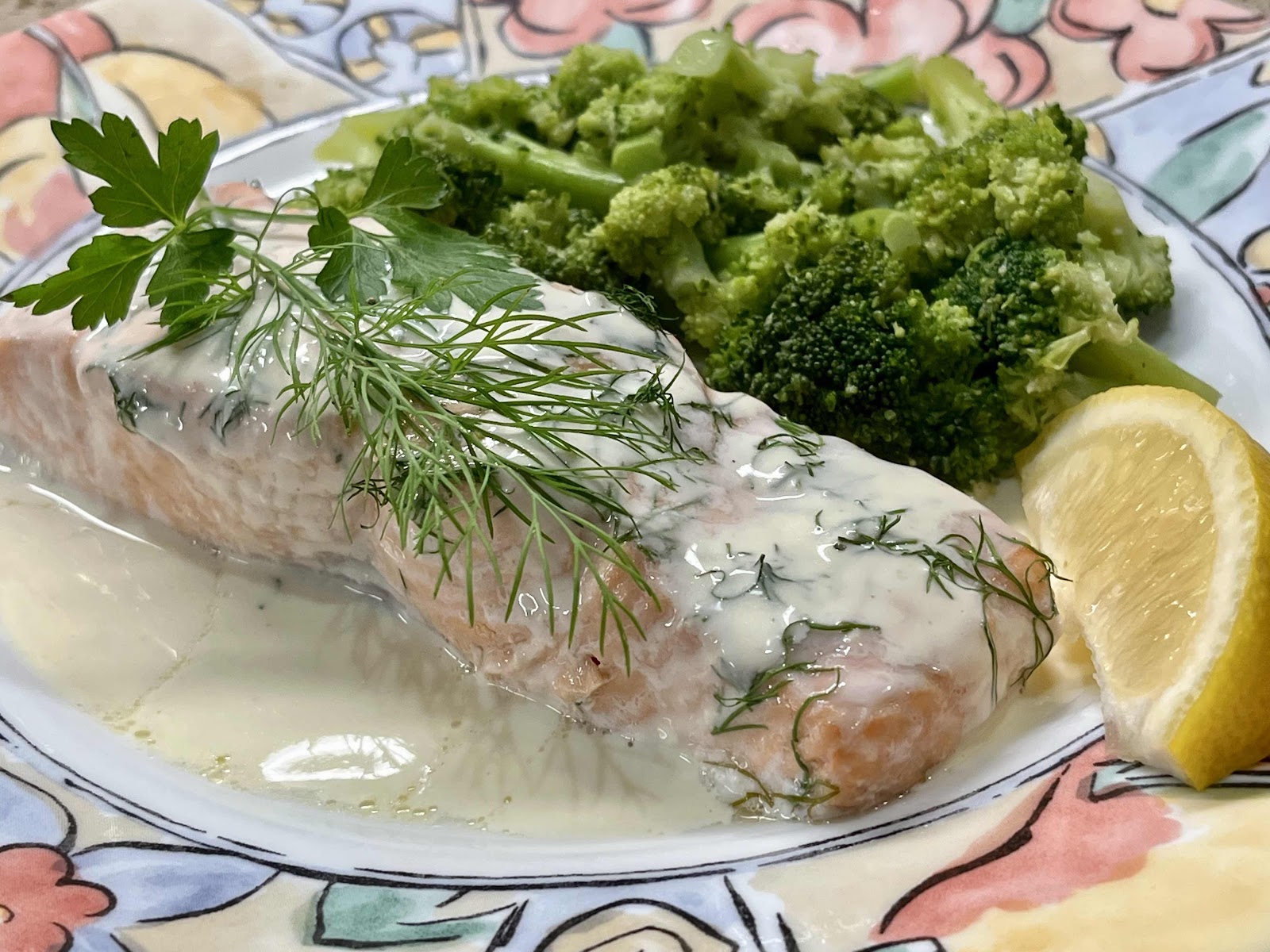
Keto Scottish Salmon in Cream
Many years ago I visited Scotland and, while there, I had the most wonderful salmon dish I had ever eaten! It was simple, but so elegant. I couldn’t get it out of my mind! When I got home I was determined to duplicate the recipe. This is what I came up with that almost exactly matches that fantastic dish! It is sophisticated and impressive enough for company or a special occasion, but quick and simple to make with only a few ingredients. Using fresh herbs is best, but in a pinch I’ve made this using dried and it turned out fine. This recipe makes two servings, but it’s easy to increase for a dinner party. It’s one of my favorite ways to prepare salmon that always brings back the wonderful memories of our Scotland vacation.

Keto Scottish Salmon in Cream
Makes 2 servings

2 salmon filets (5 oz. each)
1/2 cup heavy cream (or full-fat coconut milk for dairy free)
Juice of 1/2 lemon
1 tablespoon chopped fresh dill (or chives)
Salt and pepper to taste
1/2 to 1 teaspoon brown or dijon mustard, to taste
1 tablespoon chopped parsley

1. Preheat oven to 350°F.

2. Place salmon in a shallow dish that has been well buttered. Sprinkle with salt, pepper, lemon juice, chopped dill and/or chives.

3. Cover with foil. Cook in the preheated oven for 10 to 15 minutes until tender and the internal temperature reaches 125°F in the thickest part.

4. Meanwhile, in a small sauce pan, heat the cream gently, add the mustard and whisk. Heat until the sauce comes to a gentle simmer and thickens slightly. Spoon over the cooked fish. (If using coconut milk, you may need to simmer longer until the sauce is reduced and thickens.)

5. Garnish with chopped parsley and/or fresh dill sprigs. Serve with lemon wedges.

Nutritional Information per serving (1/2 recipe): 403 calories, 1.2 g carbohydrate (0.1 g dietary fiber, 0 g sugars), 32 g total fat (15.7 g saturated fat, 0 g trans fat), 80 mg cholesterol, 195 mg sodium, 19 mg calcium, 516 mg potassium, 1297 IU Vit A, 9 mg Vit C, 1 mg iron, 30.4 g protein. Net carbs per serving: 1.1 grams

Photo and recipe by Kathy Sheehan, copyright 2022
All rights reserved. Please do not duplicate without the author’s permission. 

Wednesday, February 16, 2022

French Style Stirred Scrambled Eggs with Smoked Salmon or Bacon

French-Style Stirred Scrambled Eggs
I eat eggs nearly every morning for breakfast, so it can get boring after a while! I always love trying new ways to prepare eggs and make my breakfast more exciting. I came across this technique for making soft, silky, decadent scrambled eggs and I am in love! The trick is to cook them over low heat and stir them constantly with a whisk. As soon as they are beginning to set and are still soft, remove them from the heat. I think this is going to be one of my very favorite ways of preparing eggs from now on!

French-Style Stirred Scrambled Eggs with Smoked Salmon or Bacon
Makes 2 servings

4 large eggs
1/8 to 1/4 teaspoon salt, to taste
1/8 teaspoon white pepper (or black pepper), or to taste
3 tablespoons heavy cream, divided
1 ounce smoked salmon, diced (or 2 slices cooked bacon, diced)
1 tablespoon unsalted butter

Optional Garnishes: chopped fresh chives or other herbs, diced tomato, flaked sea salt

1. In a bowl, whisk together the eggs, salt, pepper and 1 tablespoon of heavy cream.

2. Place a nonstick skillet over low heat and add the unsalted butter. When the butter is melted, swirl it around in the pan. Add the eggs and stir with a whisk continuously until just set, but still soft. Stir in the remaining 2 tablespoons of heavy cream. Remove from the heat and divide evenly into two serving bowls or ramekins.

3. Top with the diced smoked salmon or bacon and any other garnishes you desire. Drizzle with a tiny bit of additional heavy cream and serve immediately.

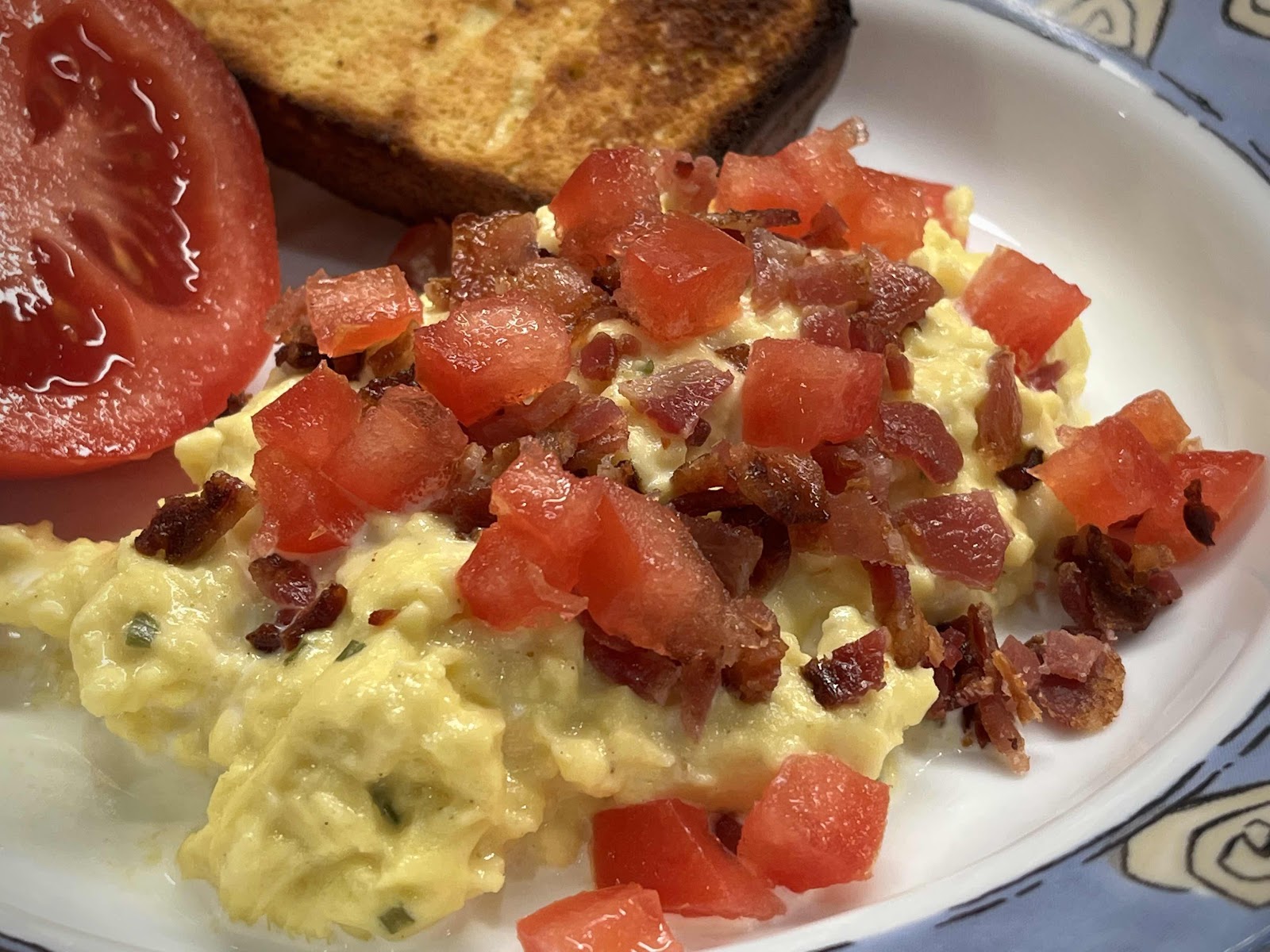
Stirred Scrambled Eggs with Bacon and Tomato
Nutritional Information per serving (1/2 recipe): 286 calories, 1 g carbohydrate (0 g dietary fiber, 0.4 g sugars), 24.9 g total fat (12.2 g saturated fat, 0 g trans fat), 421 mg cholesterol, 556 mg sodium, 60.1 mg calcium, 165 mg potassium, 2 mg iron, 309 IU Vit A, 15.2 g protein.

Photos and recipe by Kathy Sheehan, copyright 2022
All rights reserved. Please do not copy without the author’s permission.

Friday, May 29, 2020

Halibut in a Sour Cream Sauce with Buttery Onions (or Salmon)

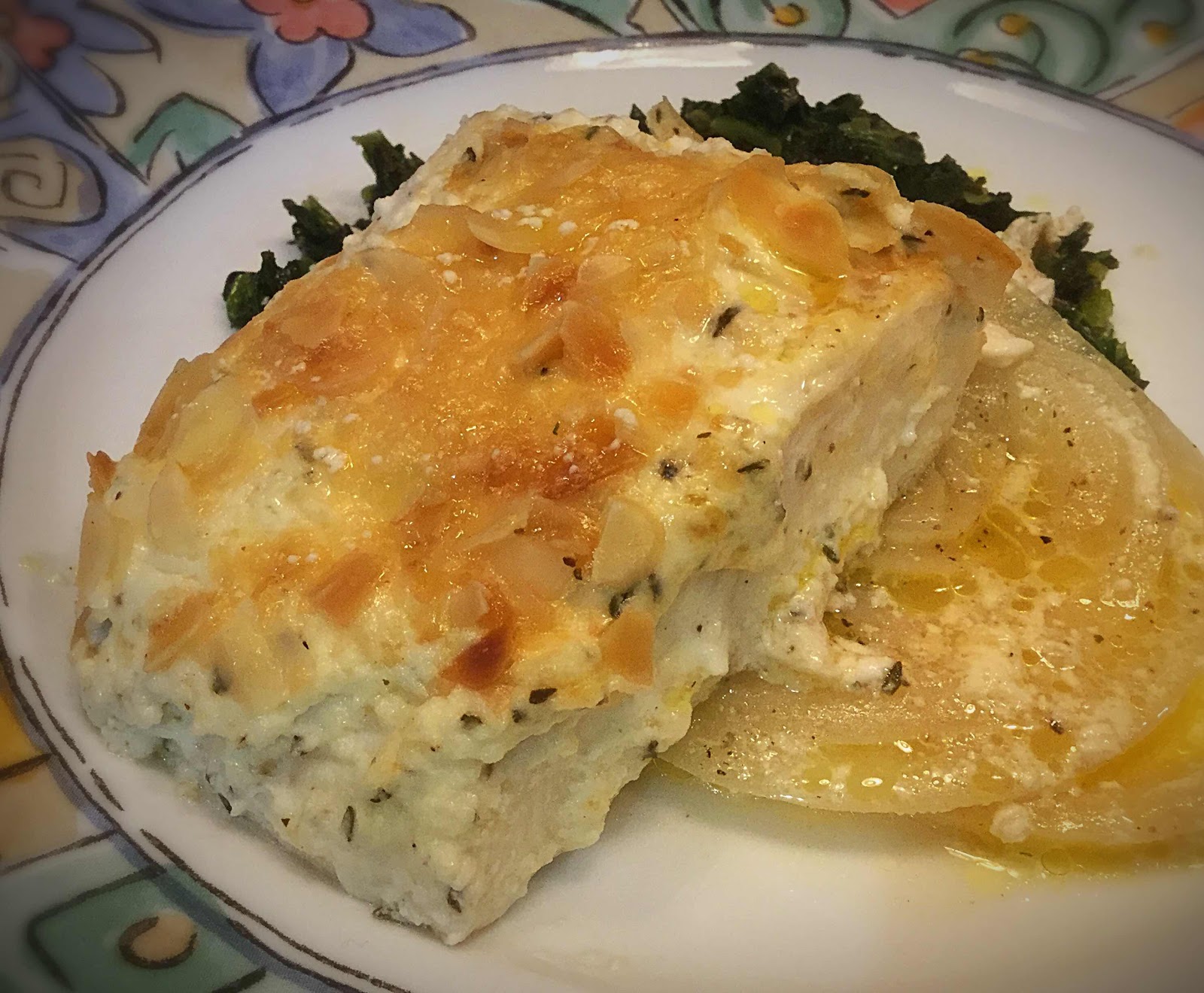
Halibut in a Sour Cream Sauce with Buttery Onions
When fish is steamed in a pouch, it comes out perfectly cooked, tender and delicious! This recipe utilizes the fragrant moisture and natural sweetness of the onions to permeate the fish, giving it wonderful flavor. You can use any type of fish that you like, but I suggest a “meaty” fish, such as halibut, salmon, swordfish or tuna steaks, as they work particularly well with this cooking technique.

Halibut in a Sour Cream Sauce with Buttery Onions
Makes 2 servings

1 tablespoon cold butter, cut into 4 thin slices
2 (1/4”) onion slices from a large onion (or 4 slices from a small onion)
2 (5 oz.) halibut steaks, or fish of your choice
1/4 cup mayonnaise 
1/4 cup sour cream
1/4 teaspoon garlic powder
1/4 teaspoon dried basil
1/4 teaspoon seasoned salt
1/4 teaspoon dried thyme
1/8 teaspoon black pepper
2 tablespoons sliced almonds, coarsely chopped
2 tablespoons shredded or grated Parmesan cheese 

1. Place each onion slice on a 12” or 14” square of heavy duty foil (or a double thickness of regular foil). Place two slices of cold butter on top of each onion. Season the fish with salt and pepper on both sides and place one piece of fish on top of each onion.

2. In a small bowl, mix together the mayonnaise, sour cream and seasonings. Set aside a couple of tablespoons for serving. Divide the remaining sauce between the two pieces of fish and spread to cover. Sprinkle each with one tablespoon of the almonds and one tablespoon of Parmesan cheese. Fold the foil around each piece of fish, sealing tightly, to create two puffed pouches, allowing for a little space over the fish so the steam can circulate and the sauce won’t be disturbed during cooking. (This step can be done ahead and the pouches refrigerated, if desired. Before cooking, remove the pouches from the refrigerator and allow to sit at room temperature for at least 20 minutes.)

3. Grill Method: Grill, covered, over indirect medium heat for 15-20 minutes or until the fish flakes easily with a fork and the internal temperature of the fish reaches 135 degrees Fahrenheit.

4. Oven Method: Preheat the oven to 350 degrees Fahrenheit. Place foil pouches on a baking sheet and bake for 22-24 minutes or until the fish flakes easily with a fork and the internal temperature reaches 135 degrees.

5. If desired, at the end of cooking, you can open the top of each pouch and broil for a few minutes until the almonds turn golden brown and the Parmesan cheese bubbles. With a spatula, carefully remove the onion and the fish onto serving plates. Drizzle the accumulated liquid from the pouch over the top of the fish and serve immediately. (I like to serve this over sautéed spinach.) Serve the reserved sour cream sauce on the side.

Nutritional Information per serving (made with halibut): 565 calories, 7.2 g carbohydrate (1.8 g dietary fiber, 2 g sugars), 40 g total fat (11.9 g saturated fat, 0 g trans fat), 98 mg cholesterol, 536 mg sodium, 213.6 mg calcium, 924 mg potassium, 2 mg iron, 192 ug Vit A, 3 mg Vit C, 42.5 g protein. Net carbs per serving: 5.4 grams

Photo and recipe by Kathy Sheehan, copyright 2020
All rights reserved. Please do not duplicate without the author’s permission. 

Saturday, November 1, 2014

Spicy Fish (or Chicken)


Just playing around in my kitchen with a few on-hand ingredients, I created this delightful meal.  I loved it so much, I've had it in various forms four times this week!  I've tried it with haddock, tilapia, salmon and chicken...and I'm certain it would be just as good made with shrimp or pork.  The secret is in the combination of ingredients: The crispy coating of nut flour, the flavorful blackening spice and the hint-of-heat in the spicy sauce.  It's one of those dishes that lingers delightfully on the tongue!  Blackening spice can be purchased or make your own, like I do.  (George Stella has a great blackening spice recipe here:  http://stellastyle.com/site/2012/12/07/blackened-salmon-or-chicken-breast/)  Adjust the seasoning to your own taste.  If you like heat, then use more blackening spice in the coating mix and a medium or hot salsa.  If you want it flavorful but tame, use a little less spice and mild salsa. It's a versatile recipe, so have fun experimenting with your favorite fish, chicken or meat to make your own unique dish.

Spicy Fish (or Chicken)
Makes 2 servings

2 fish fillets: white fish, salmon or shrimp (or 2 boneless, skinless chicken breasts)
3 tablespoons grass-fed butter or ghee*
1/2 cup salsa (no sugar added, look for 2 carbs or less per 2 TB serving)
1/2 fresh lime, cut into 4 wedges

Coating Ingredients:

1/2 cup almond or other nut flour (I used walnut flour)
1 to 1-1/2 teaspoons blackening spice (or to taste)
1/4 teaspoon black pepper
1/4 teaspoon salt, optional (the blackening spice has some salt in it)
1 teaspoon dried parsley or cilantro
1 beaten egg OR a drizzle of coconut oil (to help the coating adhere to the fish or chicken)*

1.  On a shallow plate, mix together the coating ingredients.  Pat your fish or chicken with a paper towel to dry completely.  (If your chicken breast is thick, pound to flatten slightly for more even cooking.). Either dip your fish or chicken in beaten egg or drizzle with coconut oil and press into the coating mixture until both sides are well covered.  Set aside.

2.  In a skillet, melt the butter or ghee over medium-high heat.  Add fish or chicken and allow to cook, without disturbing or turning, for at least 3-4 minutes for fish (depending on type and thickness) or 5-6 minutes for chicken until coating begins to crisp and brown.  (Shrimp will take less time, only about 1-2 minutes.)  Carefully turn fish or the chicken and continue cooking on the second side for the same amount of time or until done.  Note: Fish is done when no longer translucent and flaky.  Chicken should be at least 160-degrees Fahrenheit in the thickest part of the breast and juices run clear.  Do not consume undercooked fish or meat.  When cooked sufficiently, remove to a serving plate.

3.  Remove skillet from the heat.  To the drippings in the skillet, add the salsa and stir to deglaze the pan and loosen any brown bits.  (Note: Be careful and stand back when adding salsa to the hot pan because it will boil and possibly splatter.  If concerned, wait for a minute or two to allow the skillet to cool slightly.)  Serve sauce over fish or chicken with a generous squeeze of fresh lime juice.

Nutritional Information per serving (made with tilapia): 320 calories, 3.8 g carbohydrate (1.6 g dietary fiber, 1.5 g sugar), 23.9 g total fat (9.3 g saturated fat, 0 g trans fat), 68 mg cholesterol, 359 mg sodium, 31.7 mg calcium, 443 mg potassium, 25.2 g protein (this may vary, depending on type of fish or meat used).  Net carbs per serving: 2.2 grams

*For those with food allergies: To create a dairy free version, use ghee instead of butter.  If you are allergic or sensitive to eggs, omit and use a drizzle of melted coconut oil instead.

Recipe by Kathy Sheehan, copyright 2014

Sunday, September 22, 2013

Orange-Pecan Encrusted Salmon


Many years ago, I had a wonderful dinner at a restaurant in Damariscotta, Maine.  Unfortunately, that restaurant has since closed, but the happy recollection of that delicious meal lives on in my memory.  I remember a salmon fillet topped with a crunchy topping that included pecans and brown sugar (and probably crumbled Ritz crackers, too).  This recipe was inspired by that dish and is just as satisfying.  The addition of fresh fruit really escalates the complexity of flavors and the orange pairs beautifully with the salmon.  The topping mixture can be prepared ahead of time, making this a quick, fool-proof meal to throw together at the last minute.  Turn a week night into something special or dazzle company; whenever you serve this dish, you will see smiles!

Orange-Pecan Encrusted Salmon
Makes 2 servings

1 navel orange (seedless)
2 (5 oz.) center-cut salmon fillets, skin removed
1 teaspoon fresh orange zest (from orange)
2 tablespoons pecans, finely chopped
2 tablespoons gluten-free panko breadcrumbs
1-1/2 teaspoons coconut sugar
1-1/2 teaspoons coconut oil (melted), plus more to coat pan
salt and pepper to taste

1.  Preheat oven to 375-degrees F.  Zest the skin of the orange into a small bowl.  Add the chopped pecans, panko breadcrumbs and coconut sugar.  Add 1-1/2 teaspoons melted coconut oil and stir with a fork until well distributed and mixture resembles coarse crumbs.  Set aside.

2.  With coconut oil, grease a baking pan or individual casserole dishes; set aside.  Cut orange into four to six 3/8" slices (depending on size of orange), reserving the two rounded ends for juicing.  Stack slices and cut away the rind.  Place two or three orange slices in a row on the baking pan and repeat with remaining orange slices to create a second row (or line the bottom of your individual dishes with the orange slices). 

3.  Season both sides of one salmon fillet with salt and pepper and place it on a row of orange slices; repeat with remaining salmon fillet.  Take the reserved orange ends and squeeze fresh orange juice over each fillet.  Evenly divide the crumb mixture and spoon over the top of both fillets and press down lightly with your hand.  Bake in the preheated oven for 18-24 minutes or until salmon flakes easily with a fork.  Garnish with any remaining orange slices (optional).  Serve immediately.

Nutritional Information per serving: 369 calories, 15.9 g carbohydrate (2.6 g dietary fiber, 9.4 g sugars), 22.3 g total fat (6.2 g saturated fat, 0 g trans fat), 71 mg cholesterol, 103 mg sodium, 54.5 mg calcium, 583 mg potassium, 26.5 g protein.

Original recipe by Kathy Sheehan, copyright 2013

Thursday, May 5, 2011

Ginger-Walnut Salmon and Asparagus

I checked out an excellent cookbook from the library that I'd like to share with you. It has so many recipes I've marked to try, this book will most likely be one I will purchase for my own collection in the future. It's the 8th edition of The New American Heart Association Cookbook (ISBN 978-0-307-40757-3). The recipe below is one from their seafood section and is quick, easy to prepare and delicious! As it bakes in the foil pouch, the topping thickens and becomes a sweet and tangy glaze. The walnuts add a satisfying crunch, not to mention even more Omega 3 fatty acids to a dish already generous with them. It is truly a heart-healthy main course!

Ginger-Walnut Salmon and Asparagus
Makes 4 servings

Cooking spray
12-20 medium asparagus spears
4 salmon fillets (about 5 ounces each)
1/4 cup light brown sugar, firmly packed
3 tablespoons honey or agave nectar
1½ tablespoons Worcestershire sauce (low sodium)
1 tablespoon cornstarch
1 teaspoon grated ginger root
1/4 cup chopped walnuts
1 tablespoon plus 1 teaspoon crystallized ginger (chopped)

1. Preheat oven to 450-degrees. Lightly spray four 15" x 12-inch sheets of aluminum foil with cooking spray. Place 3 to 5 asparagus spears in the center of each. Top with the salmon, skin side down.

2. In a small bowl, whisk together the brown sugar, honey, Worcestershire sauce, cornstarch and ginger root until the sugar is dissolved. Spoon over the top and sides of the fish. Sprinkle with the walnuts and crystallized ginger. Wrap the foil loosely and seal tightly (this leaves room for the heat to circulate inside). Place the packets on a baking sheet and bake for 20 minutes.

3. Being careful to avoid steam burns, slowly open a packet and check the salmon for doneness. If it isn't quite ready, reseal the packet and bake a few minutes longer. Open the packets carefully. Remove the skin if desired (tongs work well). Transfer the fish and asparagus to plates, top with sauce and serve immediately.

Nutritional Information per serving: 357 calories, 34 g carbohydrate, 10 g total fat, 1.5 g saturated fat, 118 mg sodium, 3 g fiber, 34 g protein.

Recipe from the book The New American Heart Association Cookbook 8th edition, Clarkson Potter Publishers, New York, copyright 2010. p. 159.

Monday, July 19, 2010

Dilled Salmon with Low-fat Hollandaise Sauce

It seems my creativity can only flow in one direction at a time. For the past several weeks, I've been very busy preparing four new sewing patterns for publication, so I apologize for the infrequent postings lately. But don't worry, I'm still cooking! It's been fun going into the archives and rediscovering some of my old favorite recipes.

My daughter is home from college for the summer and this recipe was partly her creation. She made her seared dill salmon for me one evening and I just happened to have some of my low-fat hollandaise sauce leftover in the fridge. The sauce was the perfect finishing touch to her delightful recipe.

Real hollandaise sauce is made from 2-3 eggs, 2 sticks of butter and lemon juice, which is so loaded with saturated fat I might have a heart attack just thinking about it! My mock hollandaise sauce starts with a convenient dry mix and is less than 1 gram of saturated fat per serving. The packaged dry hollandaise mix, when made according to the directions, can be a bit gravy-like and too dull for me, so I spiced it up with a pinch of cayenne and more lemon. It makes ten low-fat servings, so you'll have plenty leftover for eggs benedict, asparagus or another fish dish later in the week.

Dilled Salmon with Low-fat Hollandaise Sauce
(Makes 2 servings)

1 packet of Hollandaise sauce mix (I use Knorr brand)
1 cup skim milk or Fat-free Hood Calorie Countdown Dairy Beverage
2 tablespoons Smart Balance buttery spread
Pinch of cayenne pepper (or to taste)
2 tablespoons lemon juice
2 center-cut salmon fillets (5 oz. each, no skin)
Salt & freshly ground pepper
Fresh chopped dill or dried
1 tablespoon Canola oil or Grapeseed Oil (for high temp cooking, not olive oil)

1. Mix the milk and sauce mix in a small saucepan until well blended. Heat the hollandaise sauce over medium-low heat according to package directions, except only add 2 tablespoons of buttery spread (instead of ¼ cup butter as the package recommends). After it boils for 1 minute, remove from heat and add cayenne pepper and lemon juice; set aside.

2. Heat a heavy skillet over medium to high heat (I use a cast-iron skillet). Season salmon fillets with salt & pepper on both sides, and season liberally with dill only on one side. Rub the oil on each side. When skillet is very hot, place the oiled salmon in the pan, dill side down and do not disturb for at least 2 minutes until a brown crust has formed. Turn salmon and sear other side for at least two minutes. Turn again and complete cooking to desired doneness. (If you like your salmon on the rare side, the 2 minutes per side should be fine. I like mine cooked through to flaky and no longer pink in center, which takes another 2-3 minutes. Do not overcook, or fish will be dry.) Remove to serving plate and top each serving with 2 tablespoons hollandaise sauce. Serve hot.

Nutritional Information per serving: 274.5 calories, 2.75 g carbohydrate, 9.35 g total fat, 3.8 g saturated fat, 196.5 mg sodium, 0 g fiber, 31.3 g protein.

Original recipe by Maralee and Kathy Sheehan, copyright 2010

Wednesday, April 28, 2010

Salmon or Chicken Salad with Strawberry Balsamic Reduction

Strawberries and balsamic vinegar are such a perfect combination of sweet and sour that I borrowed the idea from my earlier post (see Balsamic Strawberries with Mascarpone Cream) and took it in another direction to come up with this delicious main dish salad. The strawberries in particular give this salad a delightful Spring flavor, while the crunch from the crisp romaine and toasted almonds only adds to its freshness.

The following recipe describes how to make this salad using salmon, but it is equally delicious with boneless, skinless chicken breasts or tenders that have been quickly browned in a skillet in place of the salmon (see variation suggestion below recipe). I hope while strawberries are at their peak, you'll give this one a try.

Salmon Salad with a Strawberry Balsamic Reduction
(Makes 2 servings)

2 tablespoons slivered almonds
2/3 cup balsamic vinegar
2 teaspoons Splenda granular
1 teaspoon lemon juice
6 cups romaine lettuce
2 center cut salmon fillets (about 5 oz. each)
1 tablespoon canola oil or grapeseed oil (for high temp cooking, not olive oil)
Lemon pepper
10-12 strawberries, quartered

1. Heat a heavy skillet over medium heat (I use a small cast-iron skillet). Add almonds to dry pan and toast, stirring often, until golden brown. Pour almonds into a bowl; set aside.

2. In another small bowl, mix together the balsamic vinegar, Splenda, and lemon juice; set aside. Divide and arrange romaine lettuce on two serving plates; set aside.

3. Wipe out pan of any almond bits and increase heat to medium-high. Meanwhile, coat both sides of the salmon fillets with oil and sprinkle with lemon pepper. When skillet is very hot, place the oiled salmon in the pan and do not disturb for at least 2 minutes until a brown crust has formed. Turn salmon and sear other side for at least two minutes. Turn again and complete cooking to desired doneness. (If you like your salmon on the rare side, the 2 minutes per side should be fine. I like mine cooked through to flaky and no longer pink in center, which takes another 2-3 minutes. Do not overcook, or fish will be dry.) Place salmon on top of lettuce on serving plates and set aside.

4. Add balsamic vinegar mixture and strawberries to hot pan. Boil and cook, stirring occasionally, until reduced to ½ cup and thickened to consistency of syrup. Evenly divide balsamic reduction and strawberries over salmon and lettuce. Top each with 1 tablespoon of the toasted almonds and serve immediately.

Nutritional Information per serving: 367 calories, 20 g carbohydrate, 14 g total fat, 3.2 g saturated fat, 3.9 g fiber, 38.7 g protein.

Original recipe by Kathy Sheehan, copyright 2010

Variation: Try this salad with grilled chicken, instead of salmon. Pan-grill the chicken for about 3-4 minutes per side and cook until juices run clear. Allow chicken to rest before slicing and distributing over salad greens. If desired, add a chopped plum tomato with the romaine.

Friday, February 19, 2010

Poached Salmon in an Herbed Orange Sauce

I find it exciting to sample new fruits and vegetables. The other day in my supermarket, they were offering a different type of orange called a Cara Cara Navel, so I had to give it a try. It's flesh is dark, almost as dark as a Blood Orange, and its juice has a slight tang to it. It's really quite lovely and there are no seeds! Since citrus of any kind pairs beautifully with salmon, I created this elegant, delicious recipe using my delightful new discovery. It may look fancy, but this meal is extremely quick and easy to prepare, although do remember to marinate the salmon for at least an hour before to obtain the best and most flavorful results.

Also, I'd like to point out, that this would be perfectly delicious made with boneless, skinless chicken breasts but, if you're like me and looking for more ways to bring Omega-3 fatty acids into your diet, stick with the salmon.

Poached Salmon in an Herbed Orange Sauce
(Makes 2 servings)

1 large or 2 smaller oranges (navel, blood orange or Cara cara navel)
2 center-cut salmon fillets, about 6 oz. each (or chicken, if you prefer)
1 tablespoon olive oil
Herb rub (I used a Nantucket blend)*
¾ cup fish or chicken stock
1 tablespoon mascarpone cheese

1. Zest one orange and set aside. Cut 4 thin slices off one end of the orange and reserve for a garnish later. Squeeze the juice from the remaining orange(s); set aside. (You'll need at least 5 tablespoons of juice.)

2. Take the herb rub and sprinkle over both sides of the salmon fillets. Press with your hand until it is well adhered. Place salmon fillets in a zip-lock plastic bag. In a small mixing bowl, mix together the olive oil, 2 tablespoons orange juice and half of the orange zest. Pour into the plastic bag and seal, trying to remove as much air as possible. Massage the bag until the oil mixture coats the salmon well. Place in refrigerator to marinate for at least 1 hour. Before poaching, allow salmon to sit at room temperature for about 10 minutes.

3. Mix together 3 tablespoons orange juice and stock. Pour into a small skillet and bring to a boil over medium heat. Remove salmon from marinade; discard marinade. Place fillets into the simmering liquid and cover. Poach for about 6-8 minutes or until salmon is flaky and no longer pink in the center (do not overcook). Remove salmon to a dish and cover with foil to keep warm.

4. If necessary for a smooth sauce, strain poaching liquid and return to pan. Remove cover from skillet and raise heat to high. Boil poaching liquid until reduced by half (takes about 5-10 minutes). Whisk in the mascarpone cheese and stir until melted. Continue reducing liquid until there's about 1/3 cup remaining and it has thickened slightly. Add remaining orange zest and stir. Remove from heat.

5. To serve, arrange two orange slices on plate, top with a salmon fillet and pour half of sauce over the fish. Repeat with remaining salmon and serve immediately.

*The herb blend I used was a mixture of dried rosemary, sage, oregano, thyme, black pepper, onion powder, ginger, and lemon peel. You can easily make your own, if you do not have a purchased blend.

Nutritional Information per serving: 366 calories, 10 g carbohydrate, 19 g total fat, 4.9 g saturated fat, 1.3 g fiber, 43.3 g protein.

Original recipe by Kathy Sheehan, copyright 2010

Friday, January 22, 2010

Salmon & Creamed Spinach with Balsamic Reduction

There is a wonderful restaurant that is a favorite of my husband and mine called 21 Milk Street. It's hidden away, but worth seeking out if you're ever visiting downtown Portland, Maine. Every time I go, I get the same dish because it is so incredibly delicious! I really have no idea how they make it but, through experimentation, I have created my own version that satisfies my craving perfectly.

As elegant as this dish appears on the plate, it is very quick and easy. Also, the creamed spinach portion of this recipe is wonderful by itself as a vegetable side dish. The sauce is a simple balsamic reduction that simmers along side in a small saucepan while the rest of the meal is prepared. If you've never had balsamic reduction, you must give this a try. In this recipe, I've cut the vinegar by half with stock for a slightly smoother taste. I love this sauce and can eat it alone by the spoonful; it is so tangy and sweet. This is the perfect Valentine's Day dinner that will impress your family or special someone...but keep the secret in your vault of how truly simple it is to make!

Salmon & Creamed Spinach with Balsamic Reduction
(Makes 2 servings)

¼ cup chicken or vegetable stock
¼ cup balsamic vinegar
1 teaspoon olive or canola oil
¼ medium onion, chopped
1 clove garlic, minced
10 oz. frozen chopped spinach, thawed
Pinch of ground nutmeg
Salt and pepper to taste
2 tablespoons mascarpone cheese
2 center-cut salmon fillets (about 5 oz. each)
1 teaspoon grapeseed or canola oil

1. In a small saucepan, stir together the stock and vinegar. Simmer over medium-low heat, stirring occasionally, until reduced by half. The mixture will thicken slightly and coat a spoon. Simmering time is approximately 12-15 minutes; do not reduce too much or the sauce will be too thick.

2. While the vinegar mixture is simmering, heat the olive oil in a skillet over medium heat. Add onion and a pinch of salt. Saute until onion is soft and translucent, about 5 minutes. Add garlic and saute for another 1-2 minutes. Add thawed spinach, nutmeg, salt and pepper to taste. Cook, stirring often, until spinach is cooked through, about 4-5 minutes. Add mascarpone cheese and stir until melted and spinach is creamy. Remove from heat while you prepare the salmon.

3. Heat a heavy skillet over medium to high heat (I use a cast-iron skillet). Season salmon fillets with salt & pepper and rub the grapeseed or canola oil on each side. When skillet is very hot, place the oiled salmon in the pan and do not disturb for at least 2 minutes until a brown crust has formed. Turn salmon and sear other side for at least two minutes. Turn again and complete cooking to desired doneness. (If you like your salmon on the rare side, the 2 minutes per side should be fine. I like mine cooked through to flaky and no longer pink in center, which takes another 2-3 minutes. Do not overcook, or fish will be dry.)

4. Briefly reheat creamed spinach over medium heat. Divide equally between two serving plates. Top mound of spinach with a salmon fillet and spoon ½ of the balsamic reduction over fish and drizzle around plate.

Nutritional Information per serving (½ recipe) of spinach, salmon and sauce: 413.5 calories, 11.5 g carbohydrate, 10 g total fat, 7.5 g saturated fat, 2 g fiber, 45.6 g protein.

Nutritional Information per serving of creamed spinach only: 119 calories, 7.5 g carbohydrate, 6 g total fat, 3.7 g saturated fat, 2 g fiber, 4.5 g protein.

Original recipe by Kathy Sheehan, copyright 2010
Inspired by my favorite dish at 21 Milk Street Restaurant, Portland, ME

Friday, September 18, 2009

Salmon with Peach in a Balsamic Reduction

Every year I patiently wait for the perfect peach. Even though they show up in the stores in early summer, they tend to be hard as baseballs with no telltale peach aroma. Sometimes I fondle their fuzzy exterior, but these tasteless imitations are just a tease. So, I put them down reluctantly to wait for the real thing. Today I am happy to report: My peaches have arrived! My love affair with my favorite fruit can recommence, but we only have a few weeks together before it will go away again for another long year.

This is a super quick and easy recipe that I made especially for my salmon-loving daughter who is home visiting from college this weekend. The combination of the sweet, ripe peach and the balsamic vinegar is delightful and fresh tasting. Even though the days have cooled and we're wearing our long sleeves again, this dish sings to us the last tune of summer and helps us recollect fond memories of warm, lazy days gone by.

Salmon with Peach in a Balsamic Reduction
(Makes 2 servings)

2 center-cut salmon fillets (5 oz. each, no skin)
½ tablespoon canola or grapeseed oil (for high temp cooking, not olive oil)
salt & pepper
1 ripe peach, peeled and cut into ½-inch chunks (reserve 4 thin slices for garnish)
¼ cup chicken or vegetable stock
2 tablespoons balsamic vinegar
2 tablespoons agave nectar (or 1 tablespoon honey)

1. Heat a heavy skillet over medium to high heat (I use a cast-iron skillet). Season salmon fillets with salt & pepper and rub the oil on each side. When skillet is very hot, place the oiled salmon in the pan and do not disturb for at least 2 minutes until a brown crust has formed. Turn salmon and sear other side for at least two minutes. Turn again and complete cooking to desired doneness. (If you like your salmon on the rare side, the 2 minutes per side should be fine. I like mine cooked through to flakey and no longer pink in center, which takes another 2-3 minutes. Do not overcook, or fish will be dry.) Remove to serving plate and set aside.

2. Add chopped peach to hot pan and stir fry for about 1-2 minutes. Add stock, vinegar and agave nectar and stir to deglaze any brown bits from the bottom of the pan. Cook until sauce is reduced by half and slightly thickened, about 2 minutes. Divide fruit and sauce evenly over salmon. Garnish with reserved peach slices and serve.

Nutritional Information per serving: 357 calories, 25.8 g carbohydrate, 6.8 g total fat, 2.75 g saturated fat, 1.1 g fiber, 35.15 g protein

Original recipe by Kathy Sheehan, copyright 2009

Thursday, September 10, 2009

Salmon in a Lemon Creme Sauce

Have you ever tried to make a cream sauce using sour cream or heavy cream? They can easily curdle if cooked at a high temperature or boiled. Creme Fraiche is a French-style cultured cream that can stand up to heat and will not separate when combined with wine or lemon to create a fool-proof, flawless creamy sauce. Also, it can be whipped with Splenda and vanilla to make a divine, low carb dessert topping. You can find it in the specialty cheese or dairy section of many large supermarkets or at Whole Foods. This product is so popular in England that reduced fat versions are available. Until there is a higher demand for this gourmet item here in North America, our only choice is the full fat version. So, let's create a demand!

Most recipes you'll find that use creme fraiche as the base for their sauce tend to use the whole 8 ounce tub, which is an extremely high 56 grams of saturated fat and 880 calories! In this recipe, I have combined it with stock which cuts the bad numbers by 75% while still maintaining a delicious, creamy consistency. Don't be too concerned about the total number of fat grams in this recipe because most of it is heart-healthy Omega 3 fatty acids from the salmon. This elegant main dish is so impressive, your guests will marvel at your culinary skill. So, just don't tell them how quick and easy it is to prepare! Although I have used salmon, other firm fish can be substituted, such as swordfish, mahi mahi or tuna. In addition, this sauce is equally delicious over chicken.

Salmon in a Lemon Creme Sauce
(Makes 2 servings)

2 center-cut salmon fillets (5 oz. each, no skin)
½ tablespoon canola or grapeseed oil (for high temp cooking, not olive oil)
1 tablespoon shallot, minced
1 teaspoon lemon zest
1 teaspoon thyme, chopped
¼ teaspoon dill weed
¼ cup creme fraiche
¼ cup chicken or vegetable stock
2 tablespoons fresh lemon juice
Salt & pepper to taste
Minced parsley or chives for garnish

1. In a small bowl, mix together the creme fraiche, zest, thyme and dill weed: set aside.

2. Heat a heavy skillet over medium to high heat (I use a cast-iron skillet). Season salmon fillets with salt & pepper and rub the oil on each side. When skillet is very hot, place the oiled salmon in the pan and do not disturb for at least 2 minutes until a brown crust has formed. Turn salmon and sear other side for at least two minutes. Turn again and complete cooking to desired doneness. (If you like your salmon on the rare side, the 2 minutes per side should be fine. I like mine cooked through to flaky and no longer pink in center, which takes another 2-3 minutes. Do not overcook, or fish will be dry.) Remove to serving plate and set aside.

3. Reduce heat to medium and add shallot to pan and cook until soft. Add stock, lemon juice and stir to deglaze any brown bits from the bottom of the pan. Add creme fraiche mixture and stir to combine. Bring to a boil and, if necessary, reduce until sauce is creamy and slightly thickened. Taste to adjust seasonings and spoon evenly over seared salmon. Garnish with fresh herbs and serve.

Nutritional Information per serving: 372.5 calories, 3.1 g carbohydrate, 17.8 g total fat, 9.9 g saturated fat, 0.1 g fiber, 35.25 protein.

Original recipe by Kathy Sheehan, copyright 2009

Friday, July 31, 2009

Seared Salmon with Summer Squash in a Creamy White Wine Sauce

The summer in Maine is fleeting and the growing season so short, I like to eat locally as much and as long as possible. Not much is available at the nearby farm stand until the end of July, after which the harvest begins to come in. We will have more variety in the coming weeks, but for now I have to be creative with greens and root vegetables, such as chard, carrots and beets (you should taste my chocolate cake made with grated beets!). Today I returned home with what was available in abundance this week: summer squash and broccoli. This beautiful dinner is the delicious result of today's find and was whipped up in less than 15 minutes:

Seared Salmon with Summer Squash in a Creamy White Wine Sauce

Makes 2 servings

2 center-cut salmon fillets (6 oz. each, no skin)
Salt & freshly ground pepper
1 tablespoon Canola oil or Grapeseed Oil (for high temp cooking, not olive oil)
1 small to medium zucchini, chopped
1 small to medium yellow summer squash, chopped
¼ cup dry white wine
¼ cup chicken stock
1½ tablespoons chopped fresh herbs of your choice (dill, thyme, chives and/or parsley)
2 tablespoons low-fat sour cream (or plain, Greek-style yogurt)
1 teaspoon butter

1. Heat a heavy skillet over medium to high heat (I use a cast-iron skillet). Chop vegetables and herbs to have ready before cooking salmon; set aside

2. Season salmon fillets with salt & pepper and rub the oil on each side. When skillet is very hot, place the oiled salmon in the pan and do not disturb for at least 2 minutes until a brown crust has formed. Turn salmon and sear other side for at least two minutes. Turn again and complete cooking to desired doneness. (If you like your salmon on the rare side, the 2 minutes per side should be fine. I like mine cooked through to flaky and no longer pink in center, which takes another 2-3 minutes. Do not overcook, or fish will be dry.) Remove to serving plate and set aside.

3. Reduce heat to medium and add chopped vegetables to pan. Season with a little salt and pepper. Stir fry until they turn a golden color. Add wine & broth to deglaze the pan. Add 1 tablespoon of herbs and stir into sauce. Cook until reduced by half then remove pan from heat and allow to cool slightly. Add the sour cream (or yogurt) to sauce and stir to combine. Melt butter in warm sauce. To serve, divide equally and spoon vegetables and sauce over salmon. Garnish with remaining fresh herbs.

Nutritional Information per serving: 460 calories, 8 g carbohydrates, 14 g total fat, 4.3 g saturated fat, 2 g fiber, 43.75 g protein.

Original recipe by Kathy Sheehan, copyright 2009